

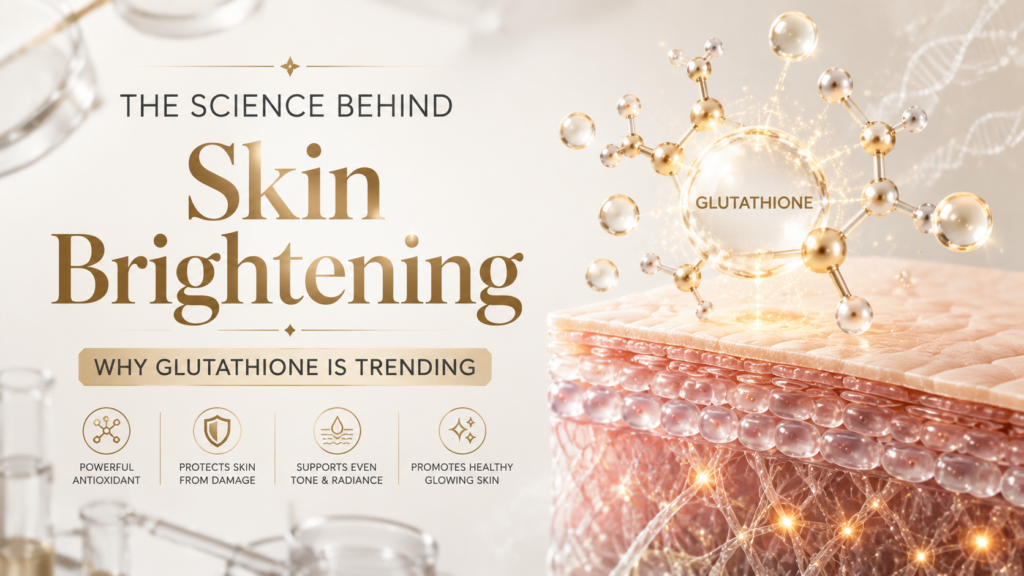
Glutathione is a naturally occurring antioxidant produced by the human body that helps protect cells from oxidative stress. In aesthetic treatments, glutathione is used because of its potential role in regulating melanin production, which may contribute to a brighter and more even-looking skin tone.
What Is Glutathione?How Does Glutathione Work for Skin Brightening?
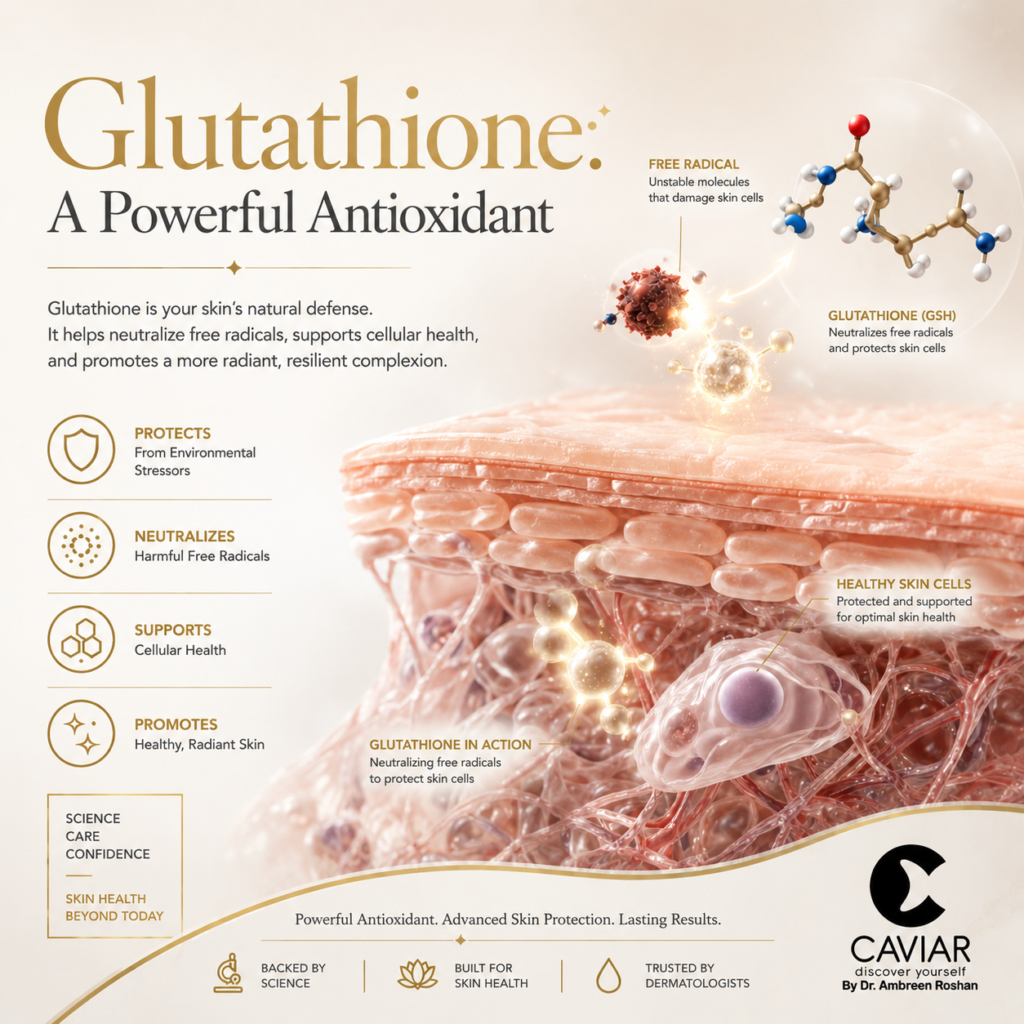
Glutathione is a powerful antioxidant naturally found inside the body, especially in the liver, where it plays an important role in protecting cells from damage caused by free radicals.
It is made from three amino acids:
- Glutamine
- Cysteine
- Glycine
Unlike many skincare ingredients applied externally, glutathione works from within the body’s natural antioxidant system. Its primary role is not to change skin colour but to support cellular protection and maintain a healthy balance against oxidative stress.
Oxidative stress occurs when unstable molecules called free radicals accumulate in the body and affect normal cell function. Environmental factors such as pollution, UV exposure, stress, and lifestyle habits can increase oxidative stress levels, which is why antioxidants are an important area of interest in skin health.
Because of its antioxidant properties, glutathione has become widely discussed in aesthetic medicine, particularly for treatments focused on improving skin brightness and overall complexion appearance.
How Does Glutathione Work for Skin Brightening?
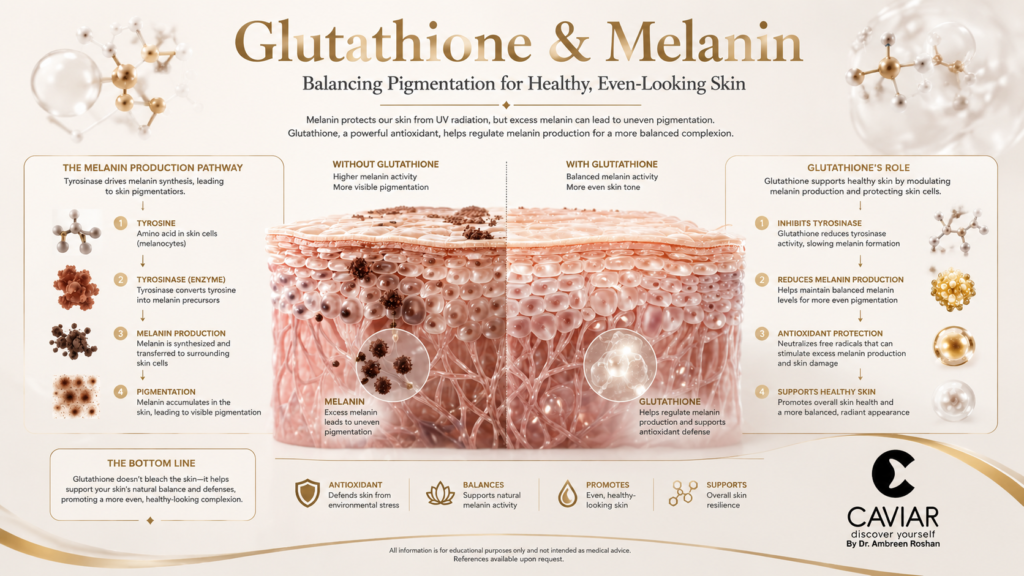
Glutathione may influence skin pigmentation through its interaction with melanin production pathways.
Melanin is the natural pigment responsible for skin, hair, and eye colour. Its production involves an enzyme called tyrosinase, which plays a key role in the formation of melanin.
Research suggests that glutathione may affect pigmentation through several possible mechanisms:
- Reducing oxidative stress that can influence pigment formation
- Affecting tyrosinase activity involved in melanin production
- Supporting a shift in melanin production pathways
This does not mean glutathione removes natural skin colour or permanently changes genetics. Instead, it is used in aesthetics because it may help improve uneven pigmentation, dullness, and overall skin radiance in suitable individuals.
Results can vary depending on factors such as skin type, lifestyle, sun exposure, existing pigmentation concerns, and individual response to treatment.
For people interested in understanding why pigmentation develops and how it is managed, understanding the role of melanin is an important first step. Related skin concerns are explained further in our guide on what causes pigmentation on the face.
Is Glutathione the Same as a Whitening Injection?
Glutathione and whitening injections are related, but they are not exactly the same thing.
Glutathione is the active antioxidant ingredient commonly used in many aesthetic whitening injection treatments. The term “whitening injection” generally describes the treatment category, while glutathione refers to the specific compound being administered.
In aesthetic clinics, glutathione whitening injections are used because delivering glutathione through an injectable method allows it to enter the body directly under professional supervision.
However, skin brightening treatments should always be approached with realistic expectations. Glutathione is not designed to create an artificial skin colour change or deliver instant transformation. The goal is usually to support a healthier-looking, more balanced complexion.
If you are comparing different approaches for improving skin brightness, our guide on whitening injections vs whitening creams: pros and cons explains how different treatment methods differ.
Why Is Glutathione Delivered Through Injection Instead of Oral Supplements?
One reason glutathione injections are discussed in aesthetic medicine is the question of absorption.
When substances are taken orally, they pass through the digestive system before reaching the bloodstream. Factors such as digestion, metabolism, and individual absorption can influence how much of the compound becomes available for the body to use.
Injectable glutathione bypasses the digestive process and delivers the compound directly under medical supervision.
However, the choice between different forms of glutathione depends on individual needs, health factors, and professional assessment. Injectable treatments are not automatically suitable for everyone, and consultation with a qualified aesthetic professional is important before considering any procedure.
The purpose of discussing injection delivery is not that one method is universally better, but that different approaches have different considerations regarding absorption, suitability, and expected outcomes.
What Does Research Say About Glutathione for Skin Whitening?
Interest in glutathione for skin brightening has increased significantly in recent years, but scientific research is still developing.
Some studies have explored the relationship between glutathione and melanin production, suggesting that it may have potential skin-lightening effects due to its antioxidant properties and influence on pigmentation pathways.
However, researchers also highlight limitations, including:
- Small study groups
- Differences in treatment methods
- Limited long-term data
- Variation in individual responses
This means glutathione should be viewed as a treatment option that may support skin brightness rather than a guaranteed solution for everyone.
A responsible approach focuses on understanding the science, evaluating suitability, and combining professional treatments with healthy skincare habits.
What Are the Side Effects of Glutathione Injections?
Like any aesthetic procedure, glutathione injections may have potential side effects, although experiences can vary between individuals.
Some possible side effects may include:
- Temporary redness or discomfort at the injection site
- Mild skin irritation
- Allergic reactions in rare cases
The risk of complications can depend on factors such as product quality, administration technique, individual health conditions, and whether treatment is performed by trained professionals.
A consultation before treatment helps identify whether glutathione injections are appropriate based on personal health history and skincare goals.
Professional supervision is especially important because injectable treatments require proper assessment, safe administration, and appropriate follow-up.
How Many Glutathione Injection Sessions Are Usually Needed?
The number of sessions required depends on individual factors, including skin condition, treatment goals, and response to glutathione.
Many aesthetic treatment plans involve a series of sessions rather than a single appointment. At Caviar, glutathione injection treatments are generally planned around 6–10 sessions, usually scheduled weekly or bi-weekly depending on professional assessment.
Some individuals may notice improvements after several sessions, while others may require a longer approach depending on their skin concerns and overall routine.
Maintaining realistic expectations is important because skin health is influenced by multiple factors, including sun protection, skincare habits, nutrition, and lifestyle.
Is Glutathione Safe for Long-Term Use?
The safety of long-term glutathione use depends on several factors, including dosage, treatment frequency, individual health conditions, and medical supervision.
While glutathione is naturally produced by the body, injectable treatments involve introducing additional amounts externally, which is why professional guidance is recommended.
Before beginning treatment, individuals should discuss:
- Existing medical conditions
- Current medications
- Allergies
- Personal skincare goals
People who are pregnant, breastfeeding, or have certain health conditions may require additional evaluation before considering glutathione injections.
Safety should always come before aesthetic goals. A qualified professional can help determine whether the treatment is appropriate for an individual’s circumstances.
Who Should Avoid Glutathione Injections?
Glutathione injections may not be suitable for everyone.
Individuals should seek professional advice before treatment, especially if they:
- Are pregnant or breastfeeding
- Have known allergies to treatment ingredients
- Have certain medical conditions
- Have concerns related to enzyme deficiencies such as G6PD deficiency
A proper consultation allows an aesthetic professional to review health history and recommend suitable options.
The best aesthetic outcomes usually come from personalised treatment plans rather than following trends without professional guidance.
How Does Glutathione Fit Into a Complete Skin Health Routine?
While glutathione is often discussed for skin brightening, healthy skin depends on more than one treatment.
A complete skincare approach may include:
- Daily sun protection
- Consistent skincare habits
- Professional treatments when appropriate
- Addressing underlying pigmentation concerns
- Maintaining healthy lifestyle choices
For individuals dealing with pigmentation, different treatments may target different causes and skin concerns. Options such as professional peels and other aesthetic procedures may be considered depending on individual assessment.
You can also explore our guide comparing laser skin whitening vs chemical peel to understand how different professional approaches work.
Frequently Asked Questions About Glutathione
1. What is glutathione and where does the body get it?
Glutathione is a natural antioxidant produced by the body, mainly in the liver. It helps protect cells from oxidative stress and supports normal cellular functions.
2. How does glutathione make skin lighter or brighter?
Glutathione may influence melanin production by affecting oxidative processes and pathways involved in pigmentation. Its effects can vary depending on individual skin type and response.
3. Are glutathione injections the same as whitening injections?
Glutathione injections are one type of whitening injection treatment where glutathione is the primary active ingredient. The term whitening injection refers to the treatment category rather than the compound itself.
4. How many glutathione injections are usually needed?
Treatment plans vary, but many protocols involve multiple sessions. At Caviar, glutathione injection treatments typically involve 6–10 sessions scheduled weekly or bi-weekly depending on professional evaluation.
5. What are the side effects of glutathione injections?
Possible side effects may include temporary redness, irritation, injection-site discomfort, or rare allergic reactions. Professional consultation helps reduce risks.
6. Can glutathione be taken orally instead of injections?
Glutathione is available in oral forms, but absorption can differ because oral supplements pass through the digestive system. The appropriate option depends on individual goals and professional advice.
7. Is glutathione safe for long-term use?
Safety depends on factors such as treatment frequency, dosage, and individual health conditions. Medical supervision is recommended for anyone considering injectable glutathione.
8. Who should avoid glutathione injections?
People who are pregnant, breastfeeding, have certain medical conditions, or have concerns such as G6PD deficiency should seek professional advice before considering treatment.
Final Thoughts
Glutathione is a naturally occurring antioxidant that has gained attention in aesthetic medicine because of its potential role in supporting brighter and more even-looking skin.
While glutathione injections may be suitable for some individuals, results depend on personal factors and should always be approached with realistic expectations.
A professional consultation helps determine whether glutathione aligns with your skin goals and whether it is the right option for your individual needs. At Caviar, treatment recommendations are based on personalised assessment rather than a one-size-fits-all approach.