

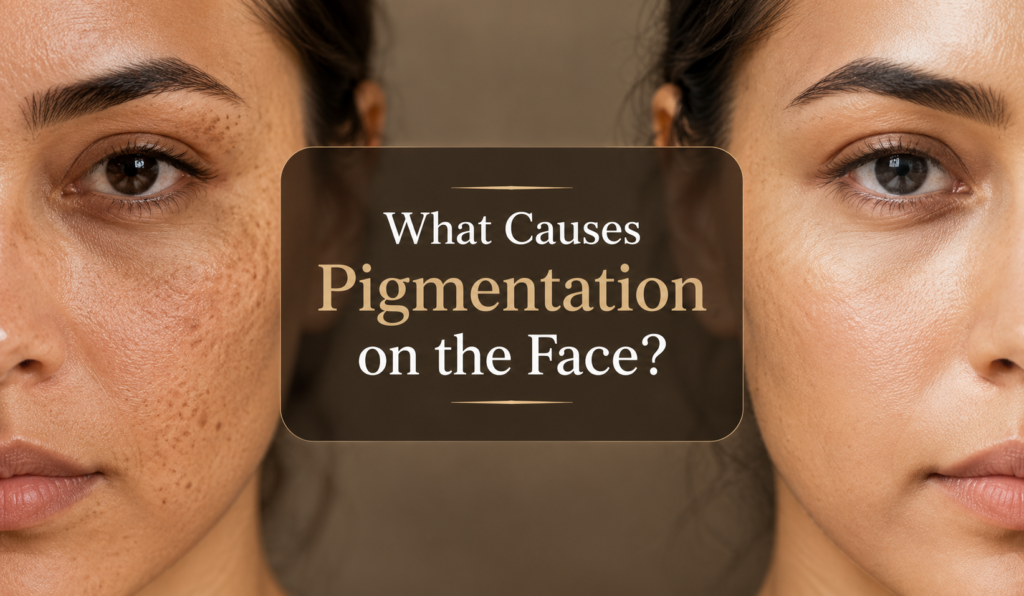
A Complete Guide to Hyperpigmentation, Melasma & Dark Spots
You wake up, step in front of the mirror, and notice it again that uneven patch near your cheekbone, or the stubborn dark spot that wasn’t there two summers ago. Maybe someone at work says “You look tired” when you actually slept eight hours. Or your wedding photos came back and the patches on your forehead that you barely noticed in daylight look ten times darker under flash. Facial pigmentation is one of the most common skin concerns in Pakistan and one of the most misunderstood. People spend months layering on brightening creams, home remedies, and viral social-media products, only to find the patches are still there sometimes worse because the root cause was never addressed. This guide explains, in plain language, exactly what causes pigmentation on the face. We will also walk through which treatments actually work in 2026, how to tell your specific type of pigmentation apart, and what you can realistically expect from professional care. If you are in Karachi and searching for answers, you are in the right place.
Quick Answer
What is the main cause of pigmentation on the face?
Facial pigmentation is caused by overproduction of melanin the pigment that gives skin its colour. The trigger can be UV radiation, hormonal changes such as pregnancy or contraceptives, post-inflammatory responses after acne or injury, genetic predisposition, or chronic deficiencies such as low Vitamin D or B12. Most cases involve more than one trigger working together.
1. What Is Facial Pigmentation And Why Does It Happen?
Your skin colour is determined by melanin, a pigment produced by specialised cells called melanocytes. Under normal conditions, melanocytes produce just enough melanin to give your skin its natural tone. But when something stresses, stimulates, or damages these cells even slightly they go into overdrive. The result is a localised or widespread darkening of the skin called hyperpigmentation. Here is the key thing most people miss: pigmentation is almost never the disease itself. It is a symptom. It is your skin raising a flag to say something is wrong underneath whether that is hormonal imbalance, inflammation, UV damage accumulating over years, or a nutritional gap. That is why treating just the surface with a cream rarely provides lasting results.
How Melanin Overproduction Works Simply Explained
Think of your melanocytes as tiny ink-factories inside the skin. Each factory has a thermostat. When UV rays hit your skin, or when inflammation occurs, or when hormones flood the system that thermostat gets turned up. The factory produces far more ink than needed, and it pools in patches rather than spreading evenly. The result: dark spots, uneven tone, or widespread discolouration.
2. Types of Facial Pigmentation: Know What You’re Dealing With
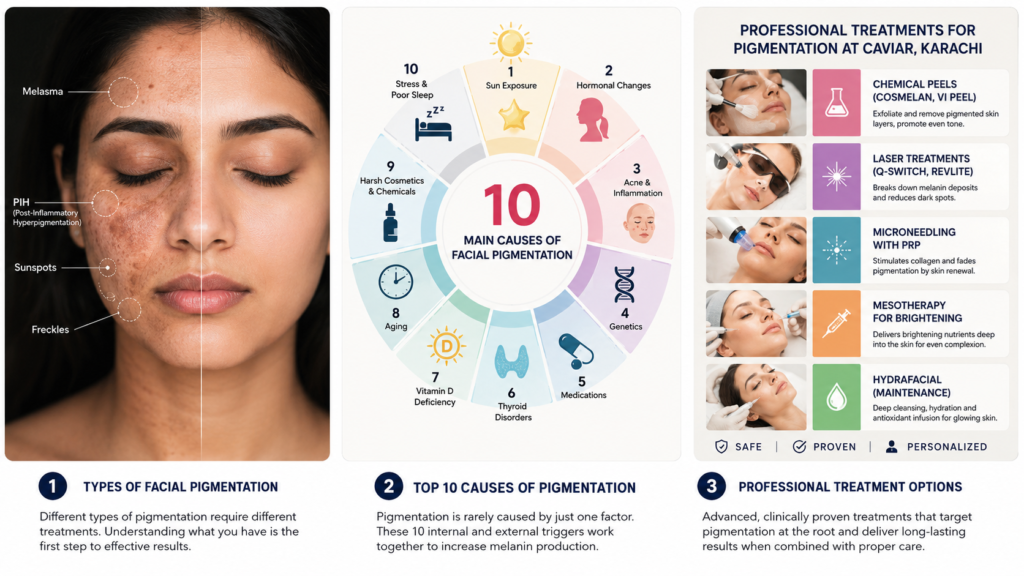
Before you can treat pigmentation effectively, you need to understand which type you have. The causes and therefore the treatments differ significantly.
Melasma (Chloasma)
Melasma appears as brownish or greyish-brown patches, usually symmetrically across both cheeks, the forehead, upper lip, and nose bridge. It is strongly associated with hormonal fluctuations and sun exposure. In Pakistan, melasma is extremely prevalent, affecting a significant percentage of women of childbearing age particularly in summer months when UV intensity is high.
The Karachi Factor: Why Melasma Is More Common Here
Karachi receives intense UV radiation year-round, with UV index levels frequently reaching 9–11 between March and October. Combined with the hormonal profiles common in South Asian women, this makes melasma particularly stubborn and recurrent in our population. Studies on South Asian skin show that melanocytes in our skin type, Fitzpatrick IV–VI, are more reactive to both UV and hormonal triggers than those in lighter skin types meaning even moderate sun exposure or hormonal fluctuation can produce significant pigmentation.
Post-Inflammatory Hyperpigmentation (PIH)
PIH is the dark mark left behind after acne, a rash, an insect bite, a burn, or any skin injury. When the skin heals from inflammation, the melanocytes in that area sometimes produce excess melanin as a kind of overenthusiastic repair response. PIH can be superficial, known as epidermal, or deeper, known as dermal, and this distinction matters enormously for treatment topical creams can address epidermal PIH but have limited effect on dermal PIH.
Sunspots (Solar Lentigines)
Also called liver spots or age spots, sunspots are flat, darkened areas that develop from cumulative UV exposure over years. They appear most commonly after the age of 35–40 but can develop earlier in people with a history of heavy sun exposure or outdoor work without protection. Unlike melasma, sunspots are not driven by hormones they are pure UV damage crystallised in the skin.
Freckles (Ephelides)
Freckles are small, flat, light-brown spots that tend to darken in summer and fade slightly in winter. They are largely genetic and represent areas of the skin where melanocytes are naturally more active. While freckles are benign and often considered aesthetic, some people prefer to even out their skin tone for a more uniform complexion.
Periorbital Hyperpigmentation (Dark Circles)
The dark discolouration under the eyes has multiple causes thin under-eye skin, shadow from the orbital bone, dilated blood vessels showing through, or true pigmentation. True pigmentary dark circles are caused by excess melanin deposits in the under-eye area, often triggered by allergies, chronic eye-rubbing, sun exposure, or genetics.
3. The 10 Main Causes of Pigmentation on the Face
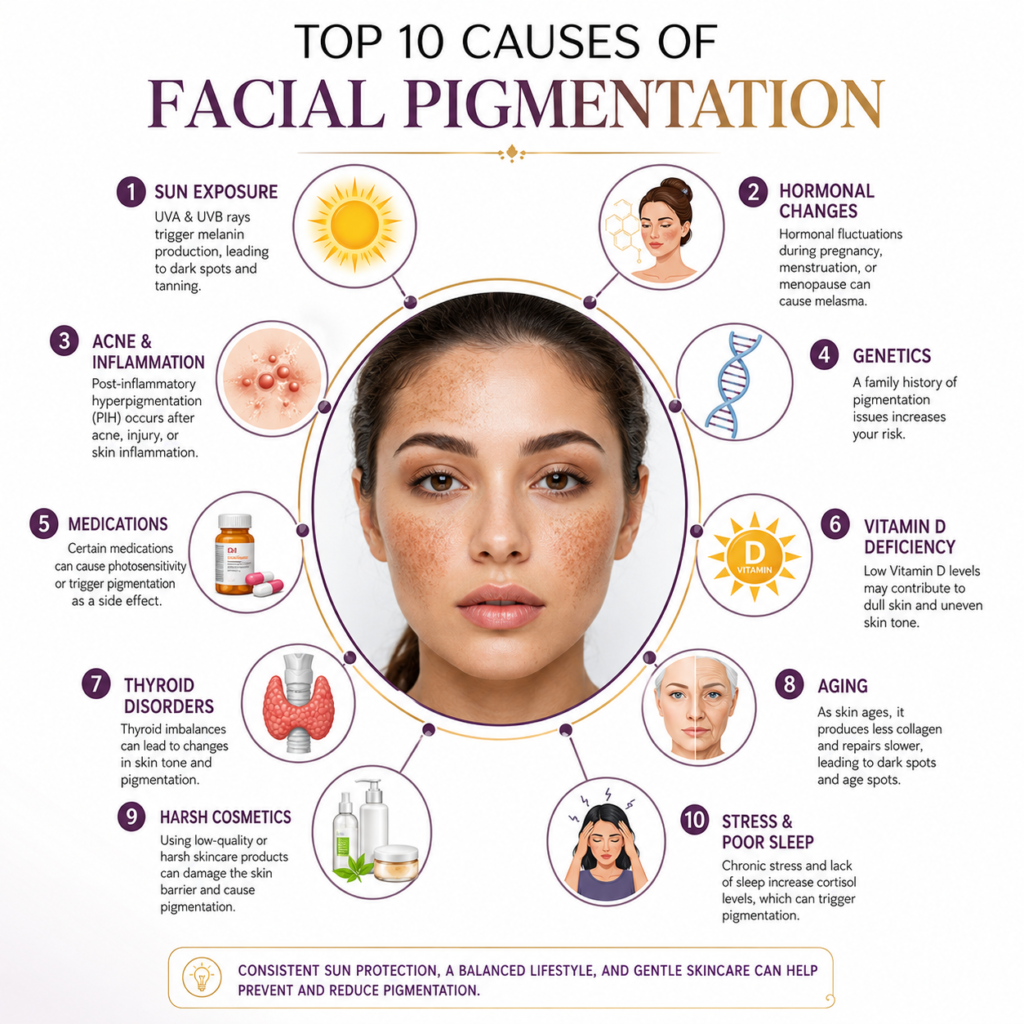
Cause 1: UV Radiation and Sun Damage
This is the single most dominant external cause of facial pigmentation. Ultraviolet rays both UVA, which penetrate deeply, and UVB, which cause surface burns stimulate melanocytes directly. The skin tries to protect itself by darkening: that is a tan. But repeated stimulation, especially without proper SPF protection, causes the melanocytes to malfunction, producing irregular, clustered deposits of melanin rather than even coverage. In Karachi, this is compounded by cultural habits many women apply atta, or flour, masks or other home remedies instead of sunscreen, providing almost no UV protection. Men rarely use SPF at all. The result is years of accumulated UV damage that eventually expresses as stubborn dark patches and uneven tone.
Cause 2: Hormonal Changes and Imbalances
Oestrogen and progesterone directly stimulate melanocyte activity. This is why pregnancy frequently triggers melasma, historically called the “mask of pregnancy”, why women on oral contraceptives often develop dark patches on the face, and why menopause with its hormonal fluctuations can cause a late-onset worsening of existing pigmentation. Polycystic Ovary Syndrome, commonly known as PCOS, is also associated with increased facial pigmentation, partly through androgen-driven mechanisms and partly through insulin resistance.
Cause 3: Inflammation and Skin Injury
Any form of skin damage a pimple, a burn, a scratch, an overly harsh facial, excessive scrubbing can trigger PIH. The inflammation sends signals to melanocytes to increase melanin production as a protective response. The cruel irony is that many common “brightening” home treatments such as using lemon juice, baking soda, or harsh physical scrubs actually create micro-inflammation in the skin, making pigmentation worse over time rather than better.
The Home Remedy Trap: A Common Scenario We See at Caviar
Scenario: Fatima, 29, from Clifton, Karachi, had mild cheek pigmentation after her second pregnancy. A relative suggested rubbing fresh lemon juice on the patches daily. Within six weeks, the patches had darkened and spread. When she came to us, she had both the original melasma and a secondary PIH from the lemon-induced irritation. Why this happens: Lemon juice is highly acidic and photosensitising. Applied to already-reactive skin in Karachi’s sun, it causes significant inflammation, which in turn triggers further melanin overproduction. The skin did not get brighter it mounted a protective response. This is not a criticism of Fatima it is an indictment of how little reliable information is available in Urdu and accessible formats about skin biology. Getting the right information is the first step to real results.
Cause 4: Genetics and Ethnicity
Melanocytes in darker skin types, including Fitzpatrick IV–VI skin commonly seen in South Asia, are inherently more reactive. They produce more melanin, they react more strongly to stimuli, and PIH persists longer in dark skin than in lighter skin types. This is not a flaw it is the mechanism by which darker skin naturally offers more sun protection but it does mean that people of South Asian heritage are more prone to visible pigmentation changes from the same triggers that would cause little visible change in European skin. Certain pigmentation conditions, including freckles and some patterns of melasma, have a clear hereditary component. If your mother had melasma during her pregnancies, your risk of developing it is significantly elevated.
Cause 5: Vitamin D Deficiency
This one surprises many people. Pakistan has a paradoxically high rate of Vitamin D deficiency despite abundant sunshine largely because cultural dress practices, sun avoidance, indoor lifestyles, and poor dietary sources mean that many people are chronically deficient. Vitamin D plays a regulatory role in melanin synthesis. Deficiency can dysregulate melanocyte activity and has been associated with worsening of pigmentation disorders, including vitiligo and melasma. Getting your Vitamin D levels checked and corrected is often an overlooked but meaningful component of long-term pigmentation management. At Caviar, we offer Vitamin D Injections as part of a comprehensive approach to skin health, addressing internal deficiencies that topical treatments alone cannot correct.
Cause 6: Certain Medications
Several commonly used medications cause drug-induced pigmentation as a side effect. These include tetracycline antibiotics sometimes used for acne, non-steroidal anti-inflammatory drugs, amiodarone used for heart conditions, antimalarial medications, and some anticonvulsants. If you have been taking any long-term medication and notice a new or worsening pigmentation pattern, this possibility deserves investigation with your prescribing doctor.
Cause 7: Thyroid Disorders
Both hyperthyroidism, or overactive thyroid, and hypothyroidism, or underactive thyroid, can affect melanin production. Hypothyroidism, in particular, is associated with a yellowing-grey discolouration of the skin as well as patches of hyperpigmentation. Thyroid conditions are significantly underdiagnosed in Pakistani women. If your pigmentation is accompanied by fatigue, hair thinning, weight changes, or feeling cold all the time, a thyroid function test is worth requesting from your physician.
Cause 8: Aging and Cumulative Damage
As skin ages, the overall number of melanocytes decreases but their regulation becomes less precise. Years of cumulative UV exposure, inflammation, and hormonal shifts accumulate to create what many people call “age spots” or “liver spots” though they have nothing to do with the liver. The skin’s ability to repair itself also slows with age, meaning pigmentation acquired later in life can be more persistent.
Cause 9: Chemical Exposure and Irritants
Repeated contact with certain chemicals including some perfumes applied directly to the face, low-quality cosmetics containing mercury or hydroquinone in unsafe concentrations, certain hair dyes dripping onto the hairline, or occupational chemical exposure can cause a form of contact dermatitis that leaves PIH in its wake. This is particularly relevant in Pakistan, where the cosmetics market has limited regulation and many whitening creams available in local stores contain unlisted or unsafe concentrations of active ingredients.
Caviar’s Professional Perspective
We regularly see patients who have been using over-the-counter whitening creams purchased from markets in Saddar or Hyderi for months or years. Some of these products contain mercury or excessively high concentrations of hydroquinone ingredients that initially lighten the skin but ultimately cause ochronosis, irreversible bluish-black discolouration, or mercury toxicity with long-term use. Professional, medically-supervised treatment using clinically proven formulations is not a luxury it is the only way to ensure you are not inadvertently making a temporary cosmetic concern into a permanent one.
Cause 10: Stress and Poor Sleep
Cortisol the primary stress hormone has complex effects on the skin, including stimulation of melanocyte-stimulating hormone. Chronic stress and chronic sleep deprivation elevate cortisol levels persistently, creating an environment in which pigmentation is more likely to develop or worsen. This is part of why many people notice their skin “looking worse” during stressful periods it is not just their imagination. The psychological and physiological are deeply connected in skin health.
4. Hypothetical Scenario: The Case of Sana How Multiple Causes Layer
To understand how pigmentation really develops in real life, it helps to follow a realistic scenario.
Hypothetical Patient Profile: Sana, 33, DHA Karachi
Background: Sana works long hours in a corporate environment but commutes 45 minutes each way in Karachi traffic. She uses a basic moisturiser but no SPF she believes her car’s windows protect her from the sun. They do not, especially against UVA.
History: She went on birth control pills aged 28 to manage PCOS. Within six months, she noticed brownish patches on her cheekbones, which she ignored.
Year 1–3: The patches remain mild and she covers them with foundation.
Year 3: She gets pregnant. Her melasma, already triggered by the pill, intensifies dramatically during the second trimester. Progesterone and oestrogen surge through the roof. Postpartum: The melasma does not fully fade. Breastfeeding hormones maintain some melanocyte stimulation. She tries lemon and turmeric masks, which cause mild irritation and add a PIH layer on top of the existing melasma.
Year 5: She comes to Caviar. Her skin now has three layers: original melasma, UV-aggravated deepening, and a PIH overlay. A blood test reveals she is also severely Vitamin D deficient.
The lesson: By the time Sana seeks help, five different cause-mechanisms are at work simultaneously. A single cream could not address this. A structured multi-modal treatment plan addressing the UV trigger, the hormonal aggravation, the inflammatory overlay, and the internal deficiency is the only rational approach. Sana’s case is not unusual. It is, in fact, representative of the majority of pigmentation presentations we see at Caviar. Pigmentation rarely has a single cause it has a network of causes that reinforce each other. This is why personalised assessment matters far more than generic product recommendations.
5. Common Questions About Facial Pigmentation Answered Directly
Can pigmentation be cured permanently?
Honest answer: Some types of pigmentation can be permanently resolved; others require ongoing management. Sunspots treated with laser or peels can be permanently removed if UV protection is maintained. PIH generally fades with proper treatment and prevention. Melasma is more complex it can be well-managed and minimised, but because it is hormonally driven, it has a tendency to recur if triggers such as sun and hormones are not carefully managed long-term.
Which treatment is best for face pigmentation in Pakistan?
There is no single “best” treatment the right approach depends on your pigmentation type, skin tone, depth of pigmentation, and overall health. Options include chemical peels such as Cosmelan and VI Peel, laser treatments such as Q-switch and Revlite, PRP/PRF therapy, and topical prescription protocols. The most effective results come from combining modalities. At Caviar, we use smart skin analysis technology to assess your specific pigmentation before recommending a plan.
Is Cosmelan Peel effective for melasma?
Yes Cosmelan is one of the most clinically validated treatments specifically for melasma and is considered a gold-standard depigmentation protocol worldwide. It works by inhibiting tyrosinase, the enzyme that triggers melanin production, at multiple steps in the pathway, making it more thorough than most topical treatments. It is suitable for all skin types including South Asian skin. Multiple clinical studies confirm significant improvement in melasma severity with good tolerability.
What is the fastest way to remove pigmentation from the face?
The fastest visible results typically come from a combination of a chemical peel such as Cosmelan or VI Peel with a targeted laser session such as Q-switch or Revlite, paired with a medical-grade home care protocol. However, “fastest” does not always mean “safest” or “most lasting” aggressive treatment without proper skin preparation or aftercare can worsen pigmentation, especially in darker South Asian skin. A clinician-supervised protocol that balances speed with safety is always the better approach.
What foods cause pigmentation on the face?
While diet is not a direct cause of facial pigmentation in most cases, certain dietary factors can aggravate it. High-glycaemic foods such as sugar and refined carbs spike insulin, which can worsen PCOS-related pigmentation and inflammation. Alcohol depletes antioxidants that protect against UV damage. Very high intake of beta-carotene from foods such as carrots and sweet potatoes can cause a benign yellowing called carotenemia. Conversely, nutrients like Vitamin C, Vitamin E, omega-3 fatty acids, and zinc support skin health and can mildly support pigmentation management as part of a broader treatment plan.
6. Professional Treatments for Facial Pigmentation at Caviar, Karachi
Understanding the cause is the first step. The second is choosing the right intervention and doing so under proper clinical supervision. Here is an overview of what is available at Caviar by Dr. Ambreen Roshan, and how each treatment addresses the underlying mechanisms of pigmentation.
Chemical Peels
Chemical peels accelerate skin cell turnover, removing pigmented surface layers and interrupting the melanin deposition cycle. At Caviar, we offer the Cosmelan Peel one of the most advanced depigmentation protocols globally as well as the VI Peel, ideal for sensitive or darker skin types, and the Green Sea Peel for gentler resurfacing. The choice of peel depends on your specific pigmentation type and skin tone.
Laser Treatments
Laser is one of the most targeted tools available for pigmentation. Our Q-switch, Helios III laser, and Revlite Cynosure system deliver specific wavelengths that are preferentially absorbed by melanin, breaking up pigment deposits without damaging the surrounding skin. This is particularly effective for sunspots and certain types of PIH. Explore our full range of laser services at Caviar.
PRP / PRF Facial Therapy
Platelet-Rich Plasma, known as PRP, and Platelet-Rich Fibrin, known as PRF, therapies use growth factors derived from your own blood to repair and regenerate skin, promoting healthy melanocyte regulation and reducing the inflammation that drives PIH. Face PRP at Caviar is particularly effective when combined with microneedling for deeper pigmentation concerns.
Microneedling
Microneedling creates controlled micro-injuries in the skin, triggering a regenerative response that can help fade PIH and improve overall skin texture. Combined with targeted serums, it can enhance the penetration of depigmenting active ingredients significantly. Learn more about microneedling at Caviar.
Mesotherapy for Facial Brightening
Mesotherapy involves micro-injections of customised cocktails containing skin-brightening vitamins, antioxidants, and depigmenting agents directly into the skin. This bypasses the epidermal barrier that limits what topical products can achieve. Mesotherapy for face at Caviar is an excellent option for diffuse uneven tone, dullness, and mild-to-moderate pigmentation.
HydraFacial for Maintenance
Between more intensive treatments, regular HydraFacials help maintain results by removing dead skin cells, delivering antioxidant serums, and improving skin hydration all factors that support an even complexion over time.
Omnilux Light Therapy
LED light therapy particularly using red and near-infrared wavelengths reduces inflammation in the skin, supports collagen production, and can help calm the inflammatory cascade that leads to PIH. Omnilux Beauty at Caviar is a comfortable, non-invasive add-on that supports the results of more intensive treatments.
Internal Support: Vitamin Injections and IV Therapy
Because pigmentation is often worsened by internal deficiencies, our treatment plans frequently include addressing nutritional gaps. Vitamin D Injections and Multivitamin Injections can provide a meaningful adjunct to topical and procedural treatments, particularly for patients whose bloodwork reveals significant deficiencies.
At a Glance: Treatment Options vs. Pigmentation Type
| Pigmentation Type | Recommended Treatments at Caviar |
|---|---|
| Melasma | Cosmelan Peel, PRP, Q-switch Laser carefully, Mesotherapy + strict SPF protocol |
| Post-Inflammatory Hyperpigmentation (PIH) | VI Peel, Microneedling + PRP, Omnilux LED, Mesotherapy |
| Sunspots / Solar Lentigines | Q-switch / Revlite Laser, Chemical Peels, HydraFacial maintenance |
| Diffuse Dullness / Uneven Tone | HydraFacial, Mesotherapy, Green Sea Peel, Vitamin Injections |
| Dark Circles (Pigmentary) | Under-eye PRP, Mesotherapy, Filler for shadow correction |
| Freckles | Q-switch Laser, VI Peel to even out tone if desired |
7. How to Prevent Pigmentation from Getting Worse
Treatment works best when paired with prevention. Here are the evidence-backed steps that make the biggest difference:
- SPF 50+ broad-spectrum sunscreen daily even on cloudy days, even indoors near windows. UVA passes through glass and cloud. Reapply every two hours if outdoors.
- Physical sun protection hats, scarves, and staying in shade between 10am and 4pm in Karachi when UV index is highest.
- Avoid known irritants stop using lemon juice, toothpaste, baking soda, or any abrasive scrub on the face. Irritation drives PIH.
- Use only clinically formulated, properly labelled cosmetic products. Avoid any whitening cream that does not list all active ingredients transparently.
- Manage hormonal health if PCOS, thyroid issues, or hormonal irregularities are present, addressing these medically reduces a key pigmentation trigger.
- Get your Vitamin D levels tested deficiency is extremely common in Pakistan and meaningfully affects skin health.
- Manage stress and prioritise sleep chronic cortisol elevation worsens pigmentation and overall skin quality.
- Follow your dermatologist’s post-treatment instructions precisely skipping SPF after a laser session or peel is the fastest way to undo results and trigger rebound pigmentation.
- Why Your Pigmentation Keeps Coming Back and How Cosmelan Peel Targets the Root Cause
- Say Goodbye to Melasma: The Ultimate Guide to the Cosmelan Peel in Karachi
- Chemical Peels Demystified: How a Peel Can Brighten Your Skin Safely
- Laser Skin Whitening vs Chemical Peel: What Actually Works for South Asian Skin in 2026
- Top 5 Safe and Effective Laser Solutions for Glowing Skin
- Adult Acne Solutions When Nothing Else Seems to Work
- How to Build a Personalised Skincare Routine with Professional Help
Ready to Actually Fix Your Pigmentation?
Pigmentation is not something you should have to feel self-conscious about, live with indefinitely, or try to cover up day after day. The science to understand it and the treatments to meaningfully address it exist. What was missing for most people in Pakistan was accessible, trustworthy guidance that treated them as intelligent adults who can understand their own skin. That is what we set out to provide at Caviar by Dr. Ambreen Roshan. Our approach starts with a proper skin analysis, continues with a personalised multi-modal treatment plan, and does not end until you are satisfied with your results and confident about maintaining them. We use FDA-approved, American-formulated products and equipment. We do not cut corners and we do not recommend what we would not recommend to our own family members. If you are in Karachi and ready to finally understand and treat your facial pigmentation, we are here.