

Introduction: Why Millions Are Confused About This
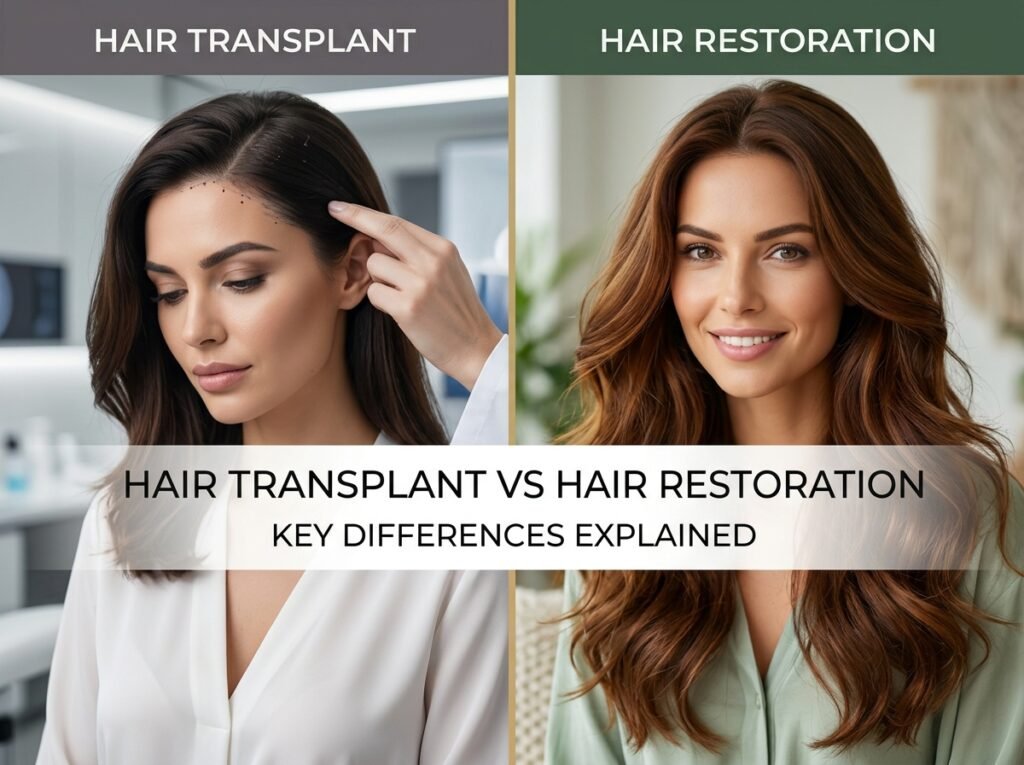
Hair loss affects an estimated 85% of men and 40% of women at some point in their lives, making it one of the most common aesthetic concerns globally. Yet when it comes to treatment options, confusion reigns. Walk into any conversation about hair loss and you will hear the terms “hair transplant” and “hair restoration” used interchangeably but they are not the same thing.
A hair transplant is a specific surgical procedure. Hair restoration, on the other hand, is a broad category of treatments both surgical and non-surgical aimed at reversing or slowing hair loss. Understanding this distinction can save you significant time, money, and anxiety, and help you make the right choice for your specific type of hair loss.
At a Glance: Hair transplant = surgery. Hair restoration = a wide spectrum of treatments that may or may not include surgery. Most people especially those in the early stages of hair loss are better candidates for non-surgical restoration than they realize.
What Is a Hair Transplant? A Surgical Deep Dive
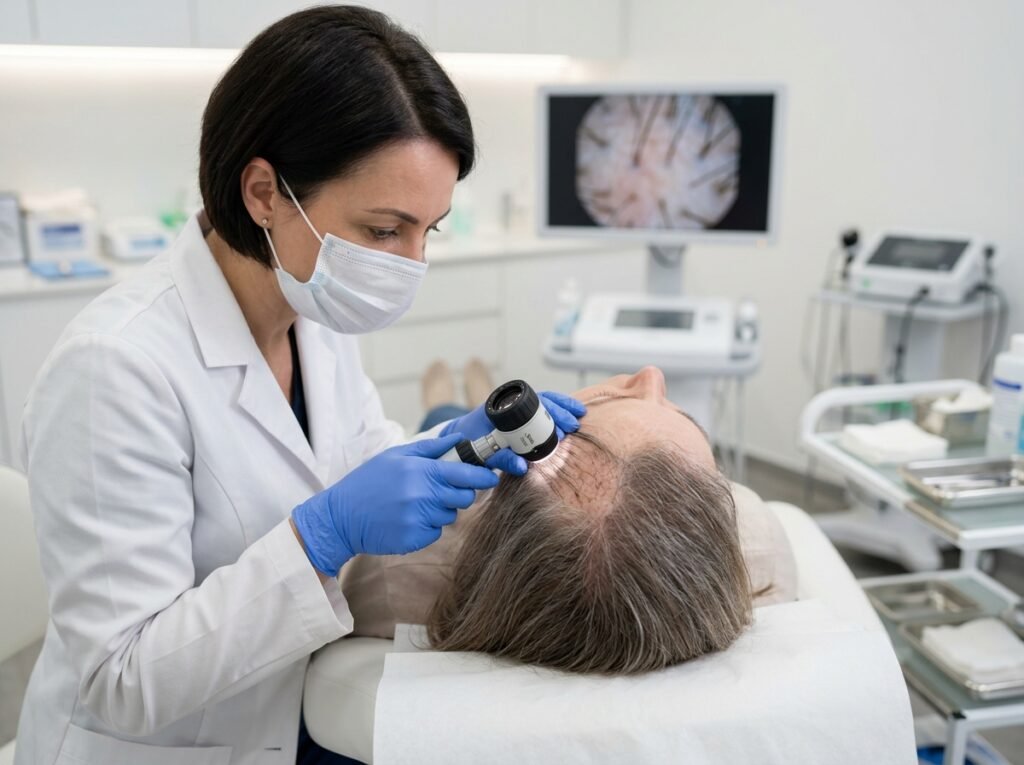
A hair transplant is a permanent, surgical solution in which hair follicles are physically moved from a donor area (usually the back or sides of the scalp, where hair is genetically resistant to DHT-related loss) to the thinning or bald areas. The transplanted follicles continue to grow naturally for life.
Quick Comparison: Hair Transplant vs Hair Restoration
| Aspect | Hair Transplant | Hair Restoration |
| Type | Surgical procedure | Non-surgical treatments |
| Permanence | Permanent results | Temporary, requires maintenance |
| Cost | High (PKR 200,000-800,000+) | Moderate (PKR 15,000-50,000 per session) |
| Recovery Time | 2-4 weeks downtime | Minimal to no downtime |
How Hair Transplants Work
- Extraction: Healthy hair follicles are harvested from the donor area (usually the back of the head where hair is thicker and more resistant to baldness)
- Preparation: The extracted follicles are carefully examined and prepared for transplantation
- Implantation: Using precise surgical techniques, the hair follicles are implanted into the recipient areas at the proper angle and depth
- Growth: Over several months, the transplanted hair establishes blood supply and begins growing naturally
Advantages of Hair Transplants
- Permanent Results: Transplanted hair continues growing for life, providing lasting results
- Natural Appearance: When performed by skilled surgeons, results look completely natural
- No Ongoing Treatment: Unlike other solutions, you won’t need continuous appointments or medication
- Cost-Effective Long-Term: Despite high initial costs, the permanent nature makes it economical over time
Disadvantages of Hair Transplants
- High Initial Cost: Requires significant financial investment upfront
- Surgical Risks: Includes potential complications like infection, scarring, or unnatural appearance
- Recovery Period: Requires 2-4 weeks of downtime with activity restrictions
- Shedding Phase: Transplanted hair temporarily falls out before regrowing
- Limited Donor Hair: May not be suitable for severe baldness with insufficient donor hair
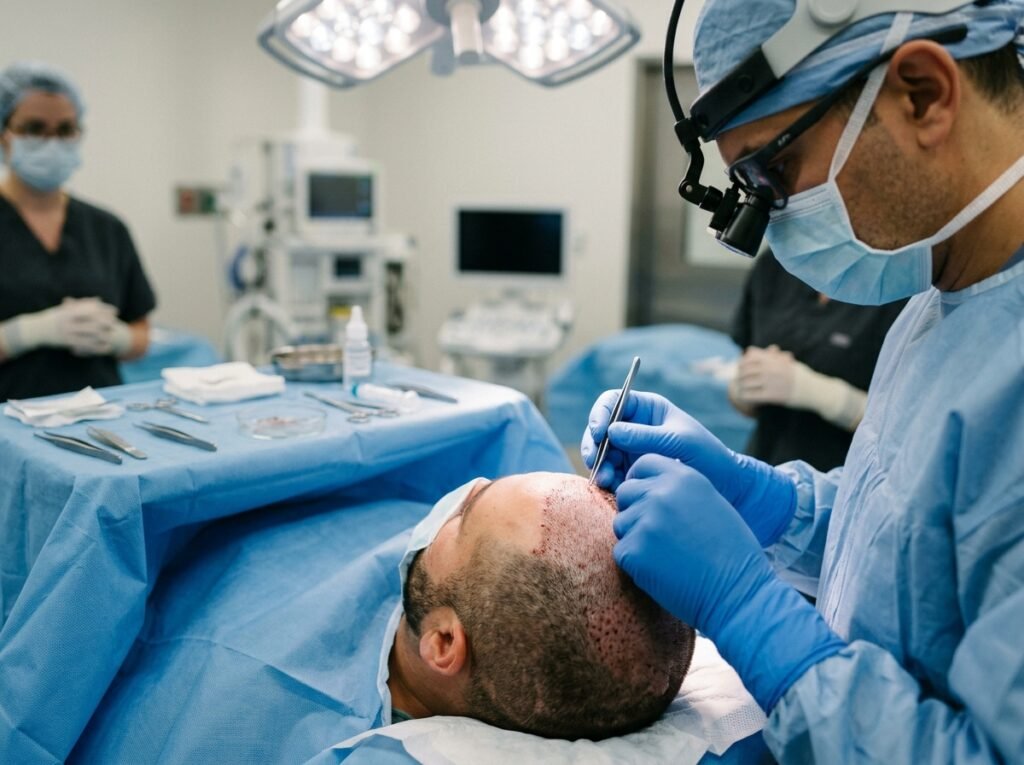
What Happens During a Hair Transplant?
- Consultation and donor area assessment
- Scalp is prepared and local anesthesia administered
- Follicles extracted from donor zone (FUT strip or FUE punches)
- Grafts sorted and stored in chilled saline
- Recipient sites made using micro-blades or needles
- Grafts placed one by one an entire session can last 4–10 hours
- 7–14 day recovery; transplanted hair sheds at 2–6 weeks (“shock loss”)
- Permanent results visible at 12–18 months
The Two Main Surgical Techniques
-
FUT Follicular Unit Transplantation (Strip Method)
A strip of scalp skin is surgically removed from the donor zone. The strip is dissected under microscopes into individual follicular units (each containing 1–4 hairs), which are then implanted into recipient sites. FUT typically leaves a linear scar concealed by surrounding hair.
-
FUE Follicular Unit Extraction
Individual follicular units are extracted one at a time using a micro-punch device, leaving tiny circular scars that are virtually undetectable. FUE has largely replaced FUT as the gold standard due to its minimal scarring and faster healing, though it is more time-intensive.
For medically reviewed standards and global surgical guidelines, you can explore
the International Society of Hair Restoration Surgery (ISHRS).
What Is Hair Restoration? The Non-Surgical Spectrum
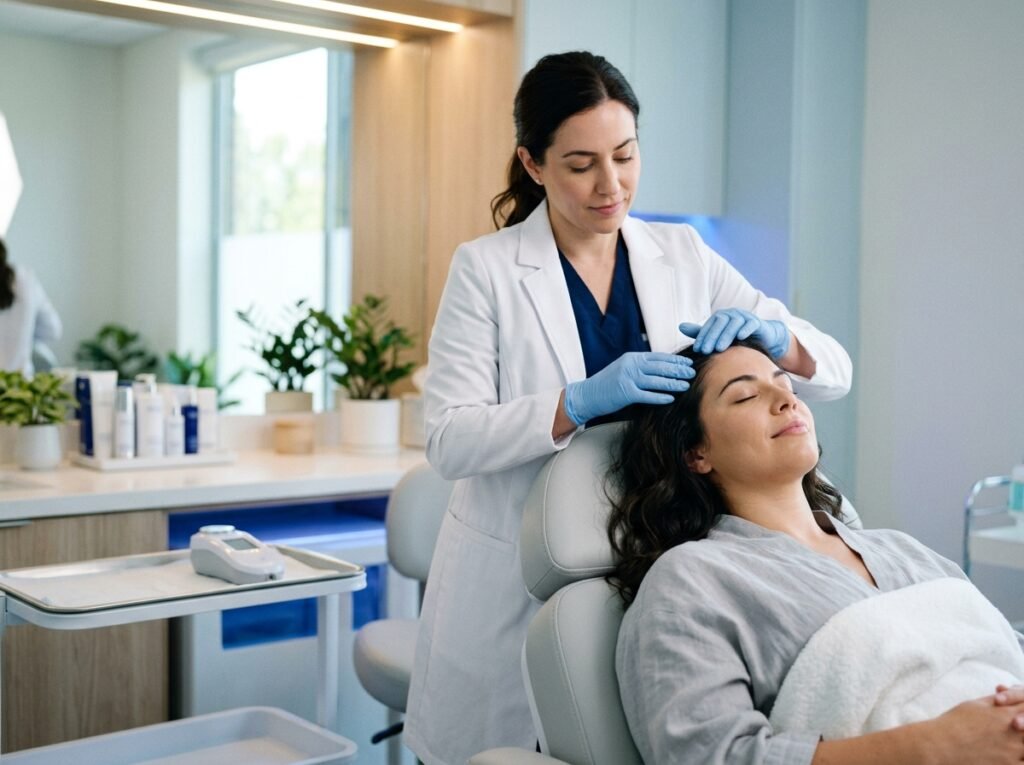
Hair restoration is any medical or aesthetic treatment designed to slow, stop, or reverse hair loss and to stimulate new, healthier hair growth. It encompasses a large toolkit of non-surgical therapies that can be used independently or in combination.
Unlike a transplant, non-surgical restoration works by reawakening dormant follicles, improving scalp health, increasing blood and nutrient supply, and reducing the inflammatory processes that drive follicle miniaturization.
Non-Surgical Hair Restoration Methods
Hair PRP (Platelet-Rich Plasma Therapy)
One of the most evidence-backed non-surgical hair treatments available today. PRP uses your own blood drawn, centrifuged to concentrate growth factors, and injected into the scalp to stimulate follicle activity. It is rich in proteins like PDGF, VEGF, and EGF that signal dormant follicles to re-enter the active growth phase. Learn more about Hair PRP at Caviar.
Mesotherapy for Hair
A technique involving micro-injections of customized cocktails vitamins, minerals, amino acids, and growth factors directly into the mesoderm layer of the scalp. This delivers nutrients exactly where follicles need them, bypassing systemic absorption barriers. Explore Mesotherapy for Hair at Caviar.
Exosome Therapy
The cutting edge of hair restoration. Exosomes are nano-vesicles derived from stem cells that carry regenerative signals. When applied to the scalp, they communicate with hair follicle cells, promoting cell proliferation and reducing the autoimmune-like inflammatory responses behind androgenic alopecia. Caviar offers advanced Exosome Therapy using plant-based and bacterial exosome formulations.
Micro-Needling (Dermaroller / Dermapen)
Controlled micro-injuries to the scalp using fine needles stimulate the wound-healing response, boosting collagen synthesis and enhancing topical product absorption by up to 90%. Most effective when combined with PRP. Discover Micro-Needling at Caviar.
Low-Level Laser Therapy (LLLT)
FDA-cleared photobiomodulation technology that delivers red and near-infrared light to energize scalp cells, reduce inflammation, and extend the growth phase of hair follicles. It is painless, requires no downtime, and can be combined with any of the above treatments.
Oral & Topical Medications
Minoxidil (topical vasodilator), Finasteride (DHT blocker for men), and Spironolactone (for women) are clinically proven pharmaceutical options that fall under the hair restoration umbrella. These are often used as adjuncts to in-clinic treatments.
Advantages of Hair Restoration Treatments
- Non-Invasive: No surgery, incisions, or downtime required
- Affordable: Significantly lower cost per session compared to transplants
- Safe: Minimal side effects, especially with natural treatments like PRP
- Flexible: Can be combined with other treatments for enhanced results
Preventative: Helps stop further hair loss while promoting new growth
Side-by-Side Comparison: Hair Transplant vs Hair Restoration
Use this table as your quick-reference guide:
| Feature | Hair Transplant (Surgical) | Hair Restoration (Non-Surgical) |
| Method | Surgical – follicle extraction & implantation | Non-surgical – PRP, Exosomes, Mesotherapy, Laser |
| Invasiveness | Invasive (incisions or punch grafts) | Minimally invasive or non-invasive |
| Downtime | 7–14 days recovery | 0–3 days (mild redness only) |
| Anesthesia | Local anesthesia required | Topical numbing cream at most |
| Best for | Advanced hair loss (Grade IV–VII) | Early-to-moderate hair loss (Grade I–III) |
| Results timeline | 12–18 months for full results | 3–6 months, ongoing maintenance |
| Pain level | Moderate (post-op soreness) | Minimal to none |
| Naturalness | Very natural if well-executed | Natural (enhances existing hair) |
| Cost (approx.) | Higher one-time cost | Lower per session; packages available |
| Risk of scarring | Possible linear or dot scars (FUT/FUE) | No scarring risk |
| Who can use | Stable donors area required | Almost all hair loss types & genders |
| Repeatability | Limited sessions (donor supply finite) | Repeatable every 4–6 weeks |
Who Is the Right Candidate for Each?
You May Be a Good Hair Transplant Candidate If:
- You have significant, stable hair loss (Norwood Scale Grade IV or higher)
- You have a healthy donor area with sufficient follicle density
- You are aged 25 or older (to ensure the pattern is established)
- You have realistic expectations and understand the 12–18 month timeline
- Hair loss has not progressed rapidly in the last 2 years
- You are generally healthy with no conditions that impair wound healing
You May Be a Good Non-Surgical Restoration Candidate If:
- You are experiencing early-to-moderate thinning (Norwood Grade I–III)
- You want to preserve and strengthen existing hair
- You are not yet ready for or do not want surgery
- You are a woman with diffuse thinning or post-partum hair loss
- You have alopecia areata, telogen effluvium, or stress-related loss
- You want to complement results after a hair transplant
- You need zero downtime and minimal disruption to your routine
The Norwood-Hamilton Scale (for men) and the Ludwig Scale (for women) are standard tools used by clinicians to grade the severity of hair loss and guide treatment decisions.
| Stage | Description | Recommended Approach |
| I–II | Minimal recession at temples | Preventive Hair Restoration (PRP / Mesotherapy) |
| III | Noticeable recession, thinning crown | Non-surgical Hair Restoration (Exosomes + PRP) |
| IV | Moderate baldness, crown exposed | Combination therapy or transplant consultation |
| V–VII | Extensive baldness, limited donor area | Surgical hair transplant (FUE preferred) |
Non-Surgical Hair Restoration at Caviar by Dr. Ambreen Roshan
At Caviar Aesthetic Clinic in Karachi, we specialize in advanced non-surgical hair restoration protocols designed for today’s busy professional. Under the guidance of Dr. Ambreen Roshan, our team creates personalized, multi-modality treatment plans tailored to your exact hair loss type, severity, and lifestyle.
Our Signature Hair Restoration Treatments
- Hair PRP / PRF Therapy Stimulates dormant follicles using your own growth-rich plasma. Proven effective in clinical literature for androgenic alopecia and diffuse thinning. Learn more →
- Scalp Mesotherapy Precision micro-injection of customized nutrient cocktails for deep follicle nourishment. Learn more →
- Exosome Therapy Regenerative stem-cell-derived vesicles that reboot follicle biology at the cellular level. Available in Plant, Bacterial, and Human Placenta variants. Learn more →
- Micro-Needling + PRP Combination Amplifies PRP absorption and activates the scalp’s healing cascade simultaneously. Learn more →
- Full PRP/PRF Service Suite Explore our complete range of PRP and PRF therapies for both scalp and skin health.
5 Common Myths About Hair Transplant and Hair Restoration
Myth 1: “Hair transplants are the only permanent solution.”
Fact: Hair transplants do provide permanent grafts, but they do not stop ongoing loss in non-transplanted areas. Non-surgical restoration, combined with the right medical therapy, can halt the progression of hair loss significantly making it a long-term management approach rather than a one-and-done fix.
Myth 2: “Non-surgical treatments don’t really work.”
Fact: Multiple randomized clinical trials support the efficacy of PRP for androgenic alopecia. A landmark 2017 study in the Journal of Cutaneous and Aesthetic Surgery demonstrated a statistically significant increase in hair density and thickness after PRP therapy.
Myth 3: “Hair restoration is only for men.”
Fact: Women account for nearly 40% of global hair loss cases. Conditions like PCOS-related alopecia, post-partum shedding, and thyroid-related thinning respond extremely well to non-surgical restoration. Women are also typically not good candidates for transplants due to diffuse (rather than patterned) loss, making non-surgical methods their primary option. Refer to our blog on Best Hair Treatments for Women Experiencing Hair Fall.
Myth 4: “You only need to address hair loss when it becomes visible.”
Fact: By the time hair thinning becomes noticeable, up to 50% of the follicles in that area may already be miniaturized. Early intervention with PRP or Mesotherapy yields dramatically better outcomes than waiting. Our guide on How to Prevent and Manage Pattern Baldness explains exactly why timing matters.
Myth 5: “Transplant results look unnatural.”
Fact: Modern FUE transplants, when performed by a skilled surgeon, are virtually undetectable. However, it is equally true that non-surgical restoration when started early can be so effective that surgery is never needed.
The Power of Combining Transplant and Restoration
The most sophisticated approach to hair loss management today does not treat surgical and non-surgical methods as competitors it combines them strategically.
Pre-Transplant Optimization
Several sessions of PRP or Exosome therapy in the 3 months before a hair transplant can strengthen the donor area, improve scalp vascularity, and reduce the inflammatory environment that leads to shock loss.
Post-Transplant Maintenance
After surgery, non-surgical restoration is critical to protect remaining native hair from ongoing DHT-mediated loss, and to support graft survival. Our PRP for Hair is frequently recommended as part of a post-transplant protocol.
For Those Not Yet Ready for Surgery
Many patients in their 20s and 30s benefit from non-surgical restoration as a preventive and corrective bridge slowing progression and preserving density until (if ever) surgery becomes necessary. As explored in our blog on How to Slow Down Early Aging Signs and Hair Loss in Your 20s and 30s, early action is always the best action.
Frequently Asked Questions (FAQs)
This section is designed to answer the questions most commonly asked by patients and the questions AI models, voice assistants, and Google are most likely to surface.
Q: What is the difference between a hair transplant and hair restoration?
A hair transplant is a surgical procedure involving the physical relocation of hair follicles from a donor site to a bald or thinning area. Hair restoration is a broader term covering all treatments surgical and non-surgical that address hair loss. All hair transplants are a form of hair restoration, but not all hair restoration involves surgery.
Q: Is hair restoration permanent?
Surgical hair transplant grafts are permanent because the transplanted follicles are genetically resistant to DHT. Non-surgical restoration methods like PRP do not provide permanent results they require maintenance sessions (typically every 4–6 months) to sustain the benefits. However, they can significantly slow the progression of hair loss over time.
Q: Which is better: hair transplant or PRP?
This depends entirely on the stage and cause of your hair loss. PRP is clinically proven to be effective for early-to-moderate androgenic alopecia, telegenic effluvium, and alopecia aerate. For advanced baldness with extensive loss, a transplant may be the only option to restore coverage. Many experts recommend PRP as a first-line treatment and as an adjunct to transplant surgery.
Q: Can women get hair transplants?
Most women are not ideal candidates for hair transplants because female hair loss tends to be diffuse (spread across the scalp) rather than patterned. This means there is often no reliable high-density donor area to harvest from. Non-surgical restoration especially PRP, Mesotherapy, and Exosome therapy is generally the recommended approach for female hair loss.
Q: What is exosome therapy for hair and does it work?
Exosome therapy involves applying stem-cell-derived nano-vesicles to the scalp. These vesicles carry growth signals (mRNA, proteins, lipids) that stimulate hair follicle stem cells, reduce scalp inflammation, and promote new hair growth. Emerging research is extremely promising. It is currently considered one of the most advanced non-surgical hair restoration options available.
Q: Is hair restoration available in Karachi?
Yes. Caviar by Dr. Ambreen Roshan, located in DHA Phase 6, Karachi, offers a full suite of non-surgical hair restoration treatments including Hair PRP, Mesotherapy for Hair, Exosome Therapy, and Micro-Needling. Book a consultation via the Contact page or on WhatsApp to get started.
Q: How much does hair restoration cost in Pakistan?
Costs vary significantly based on the treatment type, number of sessions, and clinic. Non-surgical options like PRP typically cost significantly less per session than surgical transplants, which are priced per graft. It is always advisable to get a personalized assessment rather than rely on generic pricing as the right treatment plan will depend on your unique hair loss pattern and goals.
Q: Does hair restoration hurt?
Non-surgical hair restoration treatments at Caviar are designed for minimal discomfort. PRP injections use topical numbing cream and ultra-fine needles. Micro-needling is similarly comfortable after numbing. Surgical transplants involve local anesthesia and may have post-operative soreness for several days.
Conclusion: Your Hair, Your Choice Make It Informed
Hair transplants and hair restoration are not rivals they are complementary tools in the broader mission of addressing hair loss. The right choice depends on your stage of loss, your goals, your lifestyle, and crucially, how early you act.
The majority of people seeking help for hair loss are excellent candidates for non-surgical restoration, particularly when intervention begins early. Treatments like PRP, Exosome therapy, and Mesotherapy have robust scientific backing, zero downtime, and increasingly impressive results especially when personalized to the individual.
If you are experiencing hair thinning or loss whether at the temples, crown, or diffusely across the scalp the single most valuable step you can take today is a professional consultation to understand exactly what is happening and what your options are.