

By Caviar by Dr. Ambreen Roshan · Last updated: 20 October 2026
Quick answer: A HydraFacial for aging skin should change as you get older. In your 20s, sessions focus on deep cleansing and extraction for oily, congested skin. In your 30s, they shift to hydration, brightening and early fine lines. In your 40s and beyond, they use gentler exfoliation, richer hydration and peptide boosters, often paired with treatments that lift or firm.
Your skin at 24 is not your skin at 44, so your HydraFacial shouldn’t be the same either. The device and the basic steps stay the same. What changes is the focus of each session: the serums and boosters used, the add-ons that make sense, how often you come in, and what the facial is paired with.
In this guide, the team at Caviar by Dr. Ambreen Roshan explains how a HydraFacial for aging skin is tailored to women in each decade, and how we plan a HydraFacial at Caviar around your skin.
In this guide
- Why do your skin’s needs change with age?
- What should a HydraFacial focus on in your 20s?
- How should a HydraFacial change in your 30s?
- Is a HydraFacial good for aging skin in your 40s and beyond?
- HydraFacial by age at a glance
- Why the consultation matters more than your age
- FAQs
Why Do Your Skin’s Needs Change With Age?
Your skin’s needs change because collagen, cell turnover, hydration and hormones all shift over time. These slow changes shape what your skin needs from a facial:
- Collagen declines. Aging skin makes less new collagen, so it slowly loses bounce, firmness and elasticity (Khalid et al., Life, 2022).
- Cell turnover slows. The rate at which skin renews its surface cells falls by about half between ages 30 and 70, which is one reason skin looks duller with age (Khalid et al., 2022).
- Hydration drops. Skin holds less hyaluronic acid and loses water more easily, so it feels drier.
- Hormones play a part. After menopause, falling estrogen is linked to dryness, thinner skin and fine wrinkling (Journal of the American Academy of Dermatology, 2005). Pregnancy and stress can also bring pigmentation or breakouts.
- Sun damage adds up. Years of strong sun show later as uneven tone and fine lines.
A good HydraFacial plan works with these changes instead of using one formula for everyone.
What Should a HydraFacial Focus On in Your 20s?
In your 20s, a HydraFacial should focus on keeping skin clear, clean and glowing.
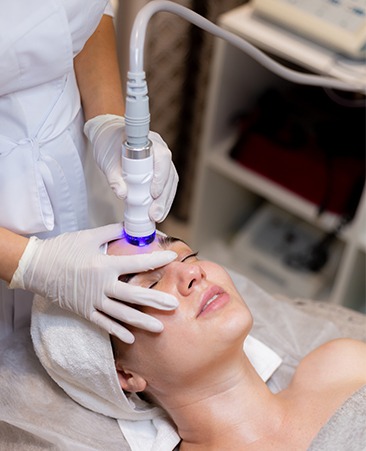
What your skin usually needs: Many women in their 20s deal with oily T-zones, clogged pores, blackheads, leftover marks from breakouts, and dullness from late nights, heavy makeup or stress.
How we tailor the session:
- More focus on deep cleansing and painless extraction to clear congested pores
- Clarifying serums for oily, breakout-prone areas
- Lightweight hydration, so oily skin is balanced without feeling heavy
- LED light as an optional add-on for calmer, clearer-looking skin
Suggested rhythm: Book a session when skin feels congested or dull, or every few weeks if you get regular breakouts. Your doctor will set the right gap.
What to pair it with: At this age, a HydraFacial works best alongside a simple home routine, not stronger clinic treatments. Our guide on slowing early aging in your 20s and 30s covers the daily basics.
How Should a HydraFacial Change in Your 30s?
In your 30s, a HydraFacial should shift towards hydration, even tone and the first fine lines.

What your skin usually needs: Your 30s often bring the first fine lines around the eyes, drier skin than before, uneven tone, and pigmentation linked to sun, stress or pregnancy. The glow you had in your 20s may take more effort to keep.
How we tailor the session:
- Hydration-rich serums with hyaluronic acid and peptides to plump the skin
- Brightening boosters to support a more even-looking tone
- Balanced exfoliation that refreshes without stripping the skin
- Radiofrequency or ultrasound as optional add-ons where suitable, for a firmer-feeling finish
Suggested rhythm: Regular sessions, often around once a month, help keep hydration and tone steady. See our guide on how often to get a professional facial.
What to pair it with: This is when many women start adding regenerative treatments. Your doctor may suggest combining HydraFacial with PRP / PRF or exosome therapy as part of a longer plan.
Is a HydraFacial Good for Aging Skin in Your 40s and Beyond?
Yes. A HydraFacial is good for aging skin in your 40s and beyond when the session is made gentler and more nourishing, and when it is paired with treatments that address firmness.
What your skin usually needs: In your 40s, skin often becomes drier and thinner, lines become more visible, and firmness drops. Hormonal changes around perimenopause can make skin feel more sensitive or tight.
How we tailor the session:
- Gentler exfoliation settings to respect thinner, drier skin
- Richer hydration and peptide or growth-factor boosters to nourish and soften
- Add-ons such as radiofrequency, ultrasound or cold therapy where suitable, to leave skin feeling smoother and more refreshed
Suggested rhythm: Consistent maintenance sessions, with your doctor adjusting the plan as your skin changes.
What to pair it with: A HydraFacial keeps skin clean, hydrated and radiant, but it does not lift sagging skin or relax deeper lines. For those, your doctor may combine it with treatments such as Botox, Morpheus8 or a thread lift. The HydraFacial then becomes the maintenance step that keeps skin glowing between bigger treatments.
HydraFacial by Age at a Glance
| Age | Main skin focus | Session focus | May be paired with |
|---|---|---|---|
| 20s | Congestion, oil, dullness | Deep cleansing, extraction, light hydration, LED | A simple home routine |
| 30s | Hydration, uneven tone, first fine lines | Plumping serums, brightening boosters, balanced exfoliation | PRP / PRF, exosomes |
| 40s and beyond | Dryness, thinner skin, loss of firmness | Gentle exfoliation, rich hydration, peptide boosters, RF or ultrasound | Botox, Morpheus8, thread lift |
Why the Consultation Matters More Than Your Age
Age is a guide, not a rule. A 28-year-old with sun damage may need a “30s” plan, and a 45-year-old with oily skin may still need deep extraction. That is why every HydraFacial at Caviar starts with a skin assessment, so the session suits your skin and not just your birthday. Good aftercare matters at every age too, so read our HydraFacial post-care guide.
Frequently Asked Questions
Can a HydraFacial replace Botox or fillers in my 40s?
No. A HydraFacial cleanses, exfoliates and hydrates the skin’s surface. It does not relax muscles or restore lost volume. Many women use it alongside Botox or fillers to keep skin quality and glow between those treatments.
Is a HydraFacial enough to prevent aging in my 30s?
On its own, no single facial prevents aging. A HydraFacial supports skin health as part of a plan that includes daily sunscreen, a good home routine and, where needed, regenerative treatments like PRP or exosomes.
Should my HydraFacial boosters change as I get older?
Yes. Younger, oilier skin usually needs clarifying serums, while skin in your 30s and 40s benefits more from hydrating, brightening and peptide-based boosters. Your doctor reviews this at each consultation.
Is a HydraFacial suitable during perimenopause or menopause?
Yes, for most women. Skin often becomes drier and more sensitive at this stage, so the session is adjusted with gentler exfoliation and richer hydration. Mention any new skin sensitivity at your consultation.
Can I get a HydraFacial if I use retinol or prescription skin creams?
Usually yes, but tell your doctor first. You may be asked to pause retinol or other strong actives for a few days before your session.
Book a HydraFacial Made for Your Skin
Whether you are in your 20s, 30s, 40s or beyond, a well-planned HydraFacial can keep your skin clean, hydrated and glowing. Visit our women-only clinic at Shahbaz Commercial, DHA Phase 6, Karachi, or explore our HydraFacial treatment at Caviar and book a consultation.
About the author: Caviar by Dr. Ambreen Roshan is a women-only aesthetic clinic in DHA Phase 6, Karachi, offering doctor-led skin, laser and injectable treatments.
Sources
- Khalid KA, et al. Aging and Wound Healing of the Skin: A Review of Clinical and Pathophysiological Hallmarks. Life (Basel), 2022.
- Estrogen and skin: the effects of estrogen, menopause, and hormone replacement therapy on the skin. Journal of the American Academy of Dermatology, 2005.