

Introduction: Why Your Scalp Matters More Than You Think
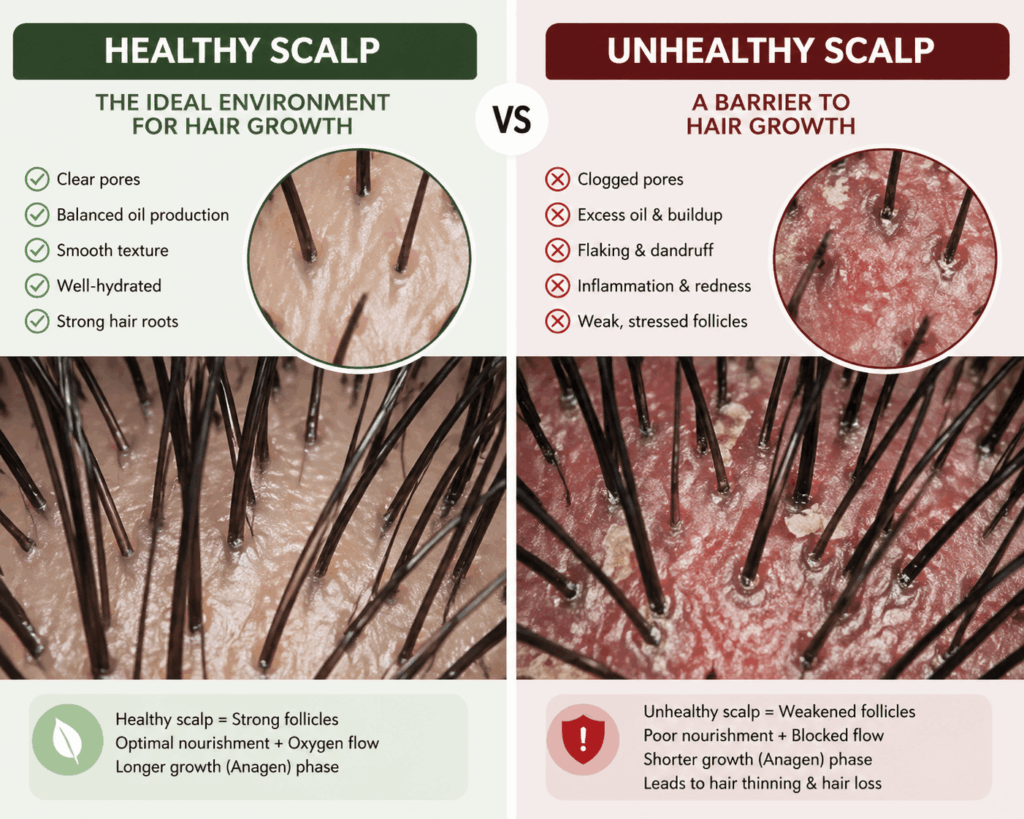
If you have been battling thinning hair, sudden shedding, persistent itching, or hair that simply refuses to grow longer no matter what shampoo you switch to, the answer is rarely about the strands themselves. The answer is almost always living right under them your scalp.
Most people obsess over conditioners, oils, and serums that coat the hair. Very few stop to think about the soil where every single strand is grown. The truth is simple but often overlooked: you cannot grow strong, thick, healthy hair from an unhealthy scalp. Just as a plant cannot thrive in dry, polluted, or neglected soil, your follicles cannot produce dense, glossy hair when the scalp environment is inflamed, clogged, undernourished, or oxygen-starved.
In this comprehensive guide, the expert team at Caviar by Dr. Ambreen Roshan one of the most trusted aesthetic and skin clinics in Karachi breaks down exactly how scalp health affects hair growth, what damages your scalp without you realising it, and which clinically proven treatments can repair the damage and bring your hair back to life.
Before exploring any treatment, it is important to understand that healthy hair grows from a healthy scalp. The condition of your scalp directly determines how strong, thick, and fast your hair grows back. If your follicles are inflamed, clogged, or starved of nutrients, even the best hair treatments will deliver only partial results. To learn how scalp health controls hair growth and what damages it without you realising, read our complete guide on How Scalp Health Affects Hair Growth: What You Should Know before starting any hair restoration plan.
Quick Answer (For Readers in a Hurry)
Q: How does scalp health affect hair growth?
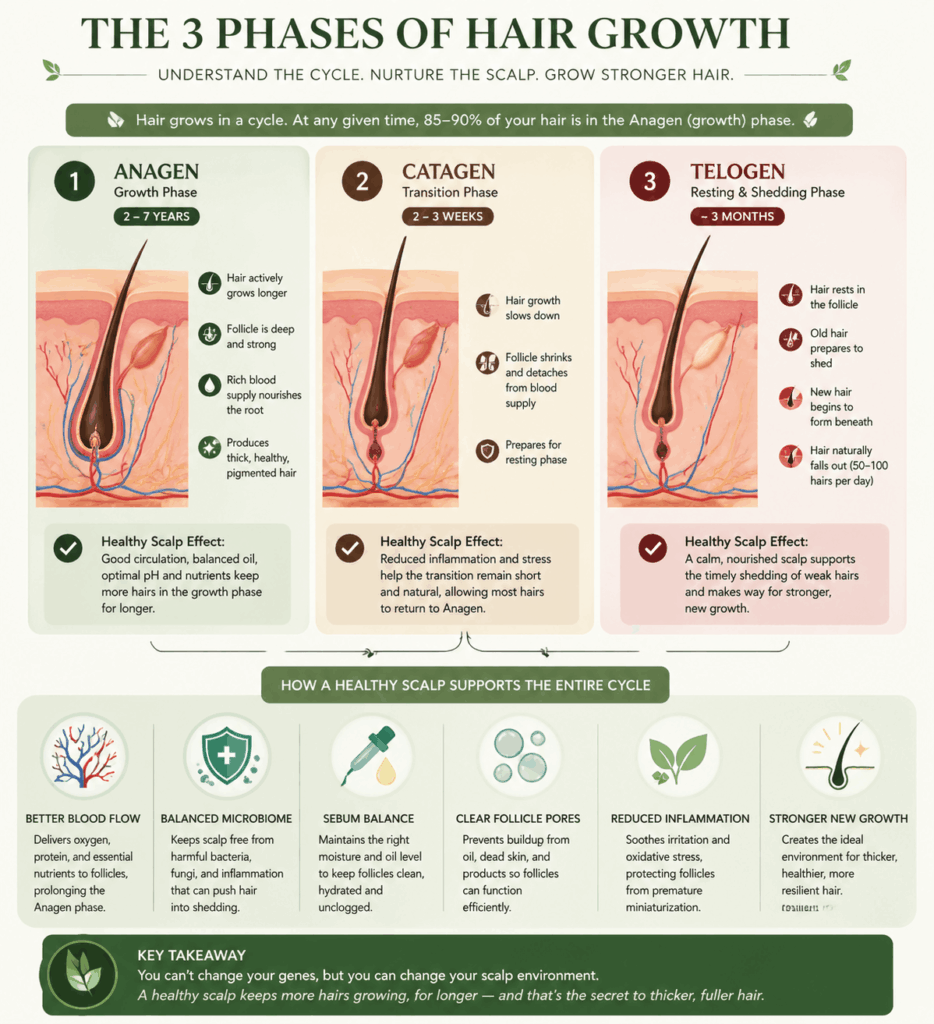
A healthy scalp is the foundation of healthy hair growth. The scalp houses around 100,000 hair follicles, each connected to a tiny blood vessel and oil gland. When the scalp is well-circulated, balanced in oil and pH, free of inflammation, and nourished with nutrients and oxygen, follicles stay in the active growth (anagen) phase longer and produce thicker, stronger strands. When the scalp is inflamed, clogged with product buildup, dehydrated, or starved of nutrients, follicles miniaturise, hair sheds prematurely, and new growth becomes thinner, slower, and weaker eventually leading to visible hair loss.
Bottom line: Treat the scalp first, and the hair takes care of itself.
Table of Contents
- The Science of the Scalp: How It Actually Works
- The Direct Link Between Scalp Health and Hair Growth
- 7 Signs Your Scalp Is Unhealthy (and Sabotaging Your Hair)
- Top Causes of an Unhealthy Scalp in Pakistan
- Daily Habits That Quietly Damage Your Scalp
- How to Build a Healthy Scalp Routine at Home
- Nutrition: What to Eat for a Healthy Scalp and Stronger Hair
- When Home Care Is Not Enough: Clinical Treatments That Work
- Frequently Asked Questions (FAQs)
- Final Thoughts
1. The Science of the Scalp: How It Actually Works
The scalp is not just skin. It is one of the most biologically active areas of your body and arguably the most demanding. It is roughly six times oilier than the skin on your face, has nearly five times more sweat glands than the rest of your body, and supports somewhere between 80,000 and 150,000 hair follicles in the average adult.
Each follicle is a miniature organ. It is fed by a tiny blood vessel that delivers oxygen, protein, vitamins, and minerals. Surrounding the follicle are sebaceous glands that produce sebum, a natural oil that keeps the scalp hydrated and forms the protective acid mantle (a thin film with a pH of 4.5 to 5.5) that fights off bacteria and fungi.
Hair grows in three repeating phases:
- Anagen (growth phase): Lasts 2 to 7 years. The longer this phase, the longer your hair can grow. Around 85 to 90% of your hair is in this phase at any time.
- Catagen (transition phase): A short 2 to 3 week phase where the follicle shrinks and detaches from the blood supply.
- Telogen (resting and shedding phase): Lasts about 3 months. The old hair sheds and a new one begins to push through.
When the scalp is healthy, this cycle runs smoothly and you barely notice the 50 to 100 hairs you naturally lose every day. When the scalp is unhealthy, the anagen phase shortens, more hair shifts into telogen at once, and shedding suddenly looks alarming.
2. The Direct Link Between Scalp Health and Hair Growth
Think of the scalp as the soil and your hair as the crop. The condition of the soil dictates everything the speed of growth, the strength of the stem, the quality of the harvest. Here is exactly how scalp health controls hair growth.
a. Blood Circulation Delivers the Fuel
Hair follicles are entirely dependent on the network of capillaries beneath the scalp for oxygen, amino acids (especially keratin building blocks), iron, zinc, biotin, and other nutrients. Poor circulation caused by stress, sedentary lifestyle, tight hairstyles, smoking, or high cortisol literally starves the follicle. Starved follicles produce thin, brittle, slow-growing hair.
b. The Scalp Microbiome Protects Your Hair
Your scalp is home to a delicate ecosystem of bacteria, fungi, and yeast the microbiome. When this microbiome is balanced, the scalp stays calm and follicles work efficiently. When it is disrupted (by harsh shampoos, hard water, pollution, or untreated dandruff), Malassezia yeast can overgrow, causing inflammation, itching, dandruff, and follicle damage that leads to diffuse hair shedding.
c. Sebum Balance Keeps Strands Strong
Sebum is your hair’s natural conditioner. Too little, and the scalp becomes dry, flaky, and the hair shaft becomes brittle. Too much, and the follicle openings get clogged, suffocating new growth. Both extremes shorten the anagen phase.
d. Inflammation Is the Silent Killer
Chronic, low-grade inflammation in the scalp often invisible to the naked eye is now considered one of the leading drivers of pattern hair loss in both men and women. Inflammatory cytokines surround the follicle and slowly miniaturise it, producing finer and finer hair until the follicle stops producing hair altogether. This is why anti-inflammatory scalp care is now central to modern hair restoration.
e. pH Balance Locks the Cuticle
A healthy scalp pH (around 4.5 to 5.5) keeps the hair cuticle flat, smooth, and shiny. Alkaline products (most cheap shampoos, hard water, some hair colours) raise the pH, lift the cuticle, and leave hair frizzy, weak, and prone to breakage.
3. 7 Signs Your Scalp Is Unhealthy (and Sabotaging Your Hair)
Most people only notice scalp problems when hair is already falling. Watch for these earlier warning signs:
- Persistent itching, tingling, or burning. A sign of inflammation, dryness, or microbial imbalance.
- Flaking, dandruff, or a scaly white residue. Could indicate seborrheic dermatitis or fungal overgrowth.
- A tight, sore, or tender scalp. Often linked to tension, poor circulation, or product buildup.
- Excessive oiliness within hours of washing. Disrupted sebum production, often from over-washing or harsh shampoos.
- Visible thinning at the crown, temples, or part line. Follicle miniaturisation has already begun.
- More than 100 to 150 hairs lost per day for several weeks. A scalp telogen effluvium episode is underway.
- Slow growth hair seems stuck at the same length for months. The anagen phase is shortening.
If you recognise three or more of these signs, your scalp needs urgent attention preferably professional.
4. Top Causes of an Unhealthy Scalp in Pakistan
Karachi, Lahore, Islamabad and most Pakistani cities present a unique combination of stressors that quietly destroy scalp health. Here are the most common culprits we see at Caviar:
- Hard water: Most urban supply lines in Pakistan deliver water with very high mineral content. Calcium and magnesium leave a film on the scalp, dry it out, and clog follicles.
- Air pollution and dust: 5 particles settle on the scalp, oxidise the sebum, and trigger low-grade inflammation that accelerates hair loss.
- Heat and humidity: Karachi’s coastal humidity encourages excess sweat, fungal growth, and clogged follicles.
- Vitamin D and iron deficiency: Despite plenty of sun, indoor lifestyles and dietary gaps mean a huge percentage of Pakistanis are vitamin D, B12, ferritin, and zinc deficient all of which directly impair hair growth.
- Hormonal stress: PCOS, post-pregnancy hormonal shifts, thyroid imbalance, and chronic stress are extremely common and almost always show up on the scalp first.
- Poor diet: Crash dieting, low protein intake, excessive sugar and refined carbohydrates starve follicles and inflame the scalp.
- Tight hairstyles: Continuous tight buns, braids, and ponytails cause traction alopecia, especially around the hairline and temples.
- Chemical overload: Frequent colouring, smoothing, keratin treatments, and rebonding strip the cuticle and inflame the scalp.
5. Daily Habits That Quietly Damage Your Scalp
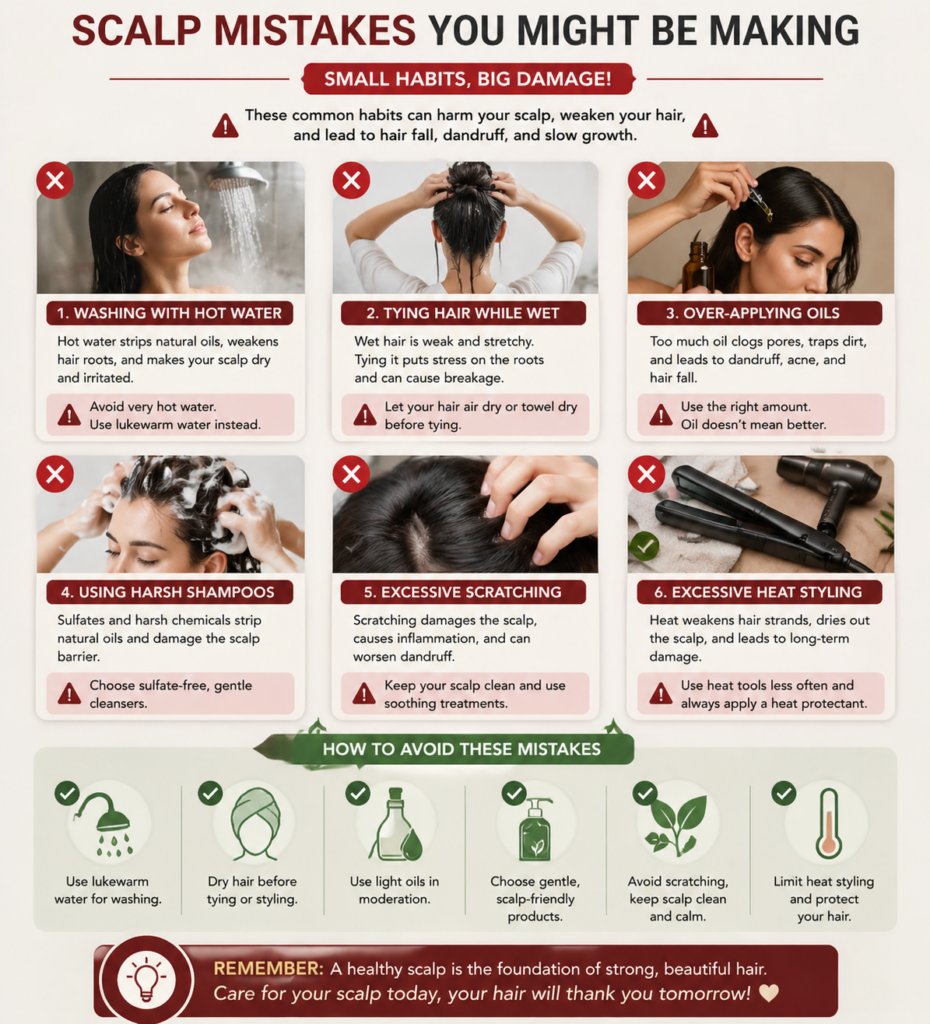
Even people who invest heavily in haircare unknowingly do small things every day that damage their scalp. Stop these immediately:
- Washing hair with very hot water it strips the protective acid mantle
- Tying hair up while still wet weakens roots and traps moisture against the scalp
- Using sulphate-heavy shampoos daily disrupts the microbiome
- Applying heavy oils and leaving them overnight without washing clogs follicles
- Skipping conditioner on the scalp area but never washing it off completely buildup blocks pores
- Brushing wet hair aggressively fractures the shaft and pulls at follicles
- Sleeping on cotton pillowcases friction and absorption dehydrate scalp and strands
- Ignoring sun protection on the scalp during summer UV damages follicles
6. How to Build a Healthy Scalp Routine at Home
Start with this simple, science-backed routine that reverses most early scalp damage in 8 to 12 weeks.
Step 1: Cleanse correctly
Wash your hair 2 to 3 times a week with a gentle, sulphate-free, pH-balanced shampoo. Massage the scalp in circular motions for at least 60 seconds this lifts buildup AND boosts circulation. Use lukewarm water, never hot.
Step 2: Exfoliate weekly
Once a week, use a scalp scrub or a mild salicylic acid scalp treatment to remove dead skin, product residue, and excess sebum. This is the single most underrated step for healthy hair growth.
Step 3: Massage daily
A 4 to 5 minute scalp massage with your fingertips (no nails) increases blood flow by up to 40%. Studies have shown daily scalp massage measurably increases hair thickness within 24 weeks.
Step 4: Treat with targeted serums
Use a leave-on scalp serum containing peptides, niacinamide, caffeine, rosemary extract, or redensyl. Apply only to the scalp, not the lengths.
Step 5: Protect
Wear a hat or scarf in direct sunlight, switch to a silk or satin pillowcase, and avoid tight hairstyles for at least 12 hours a day.
7. Nutrition: What to Eat for a Healthy Scalp and Stronger Hair
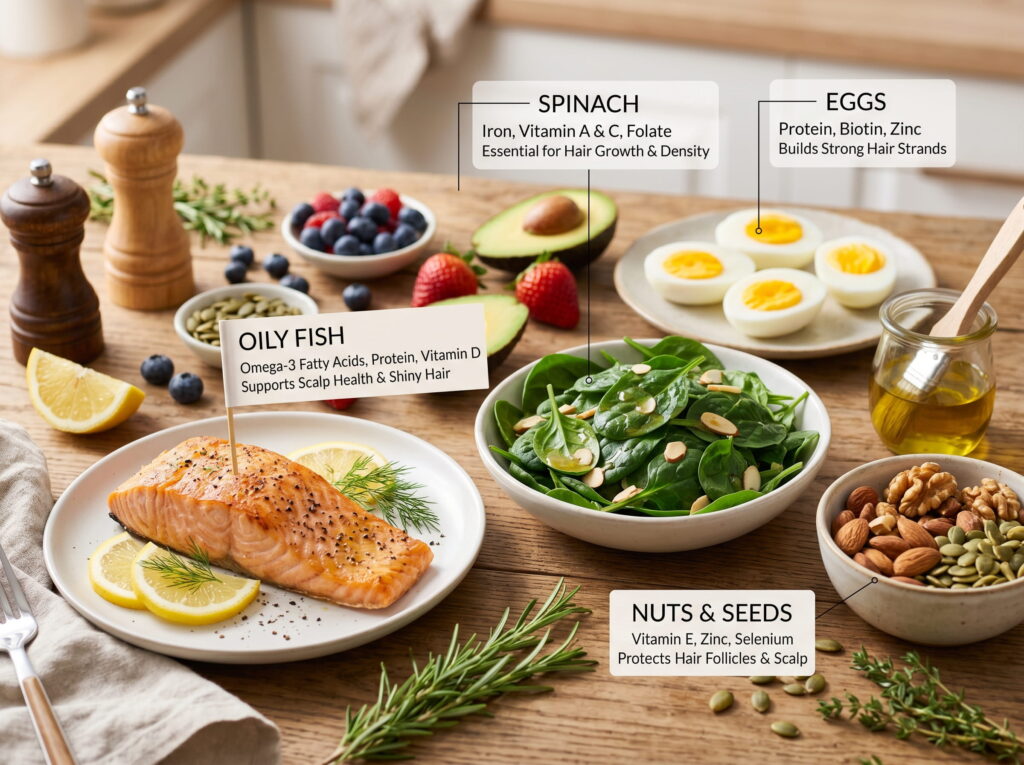
No topical product can compensate for nutritional deficiencies. Hair follicles are among the most metabolically demanding cells in the body. Prioritise these nutrients:
- Protein (the building block of keratin): eggs, chicken, fish, lentils, Greek yoghurt, paneer.
- Iron and ferritin: red meat, liver, spinach, beetroot, dates. Low ferritin is the single most common cause of female hair shedding.
- Zinc: pumpkin seeds, chickpeas, beef.
- Biotin and B-complex: eggs, almonds, oats, sweet potatoes.
- Vitamin D: oily fish, fortified milk, sunlight, supplementation if levels are low.
- Omega-3 fatty acids: salmon, walnuts, chia seeds, flaxseeds anti-inflammatory and condition the scalp from within.
- Hydration: at least 2.5 to 3 litres of water daily.
If you suspect a deficiency, get a blood panel done. At Caviar, our team frequently combines clinical scalp treatments with corrective Multivitamin Injections and Vitamin D Injections to ensure the body has the raw materials it needs to actually grow new, strong hair.
8. When Home Care Is Not Enough: Clinical Treatments That Work
If you have already tried multiple shampoos, oils, and over-the-counter serums for 6 months or more without results, it is time to address the issue medically. Modern aesthetic dermatology now offers regenerative, non-surgical treatments that work with your body’s own biology to revive the scalp and reactivate dormant follicles.
a. Hair PRP (Platelet-Rich Plasma) Therapy The Gold Standard
Hair PRP Therapy is currently the most clinically proven, non-surgical treatment for hair thinning, pattern hair loss, and poor scalp health. A small amount of your own blood is drawn, spun in a high-precision centrifuge to isolate the platelet-rich plasma a concentrate packed with growth factors and then microinjected into the scalp.
These growth factors do exactly what your scalp has been missing:
- Stimulate dormant hair follicles to re-enter the anagen phase
- Increase blood supply to the follicle base
- Reduce scalp inflammation
- Thicken existing hair shafts
- Strengthen the anchor of each follicle, reducing shedding
Most patients see visibly less shedding within 4 to 6 weeks and noticeable density and thickness improvement within 2 to 3 months. A standard course is 3 to 6 sessions, spaced 4 weeks apart, followed by maintenance every 6 to 12 months.
b. Mesotherapy for Hair
Hair Mesotherapy delivers a customised cocktail of vitamins, amino acids, peptides, biotin, and minerals directly into the mesodermal layer of the scalp exactly where the follicles live. Because the nutrients bypass the digestive system and the bloodstream, follicles get a far higher concentration than any oral supplement could deliver. It is excellent for diffuse thinning, post-pregnancy hair loss, and stress-related shedding.
c. Microneedling
Microneedling creates thousands of microscopic, controlled channels in the scalp. This triggers a healing response that releases its own growth factors, dramatically increases the absorption of any topical product applied afterwards, and improves circulation. It works beautifully on its own and even better when combined with PRP.
d. Exosomes Therapy The Future of Hair Restoration
Exosomes therapy is the newest generation of regenerative scalp treatment. Exosomes are tiny extracellular vesicles loaded with hundreds of growth factors, peptides, and signalling molecules that instruct your scalp cells to repair, regenerate, and produce healthier hair. They are particularly useful for stubborn cases where PRP alone has plateaued, advanced thinning, and patients looking for the most cutting-edge results available globally.
e. Combination Protocols
In real clinical practice, the best results almost always come from a combination for example, microneedling + PRP, or PRP + exosomes + nutritional injections. At Caviar, every protocol is custom-designed after a thorough scalp assessment using our Smart Magic Mirror skin and scalp analysis technology, so no two patients ever receive an identical plan.
Frequently Asked Questions (FAQs)
Q1: Can an unhealthy scalp really cause permanent hair loss?
A: Yes. If chronic inflammation, scarring, or follicle miniaturisation is left untreated for years, follicles eventually die and stop producing hair. The earlier you intervene, the higher the chance of full recovery.
Q2: How long does it take to fix an unhealthy scalp?
A: With a corrected home routine and proper nutrition, mild scalp issues improve in 8 to 12 weeks. Moderate to severe cases especially those involving hair loss typically require 3 to 6 months of clinical treatment such as PRP or mesotherapy combined with home care.
Q3: Is Hair PRP painful?
A: At Caviar, the scalp is numbed with a topical anaesthetic before the session, so most patients describe the sensation as mild pressure or tingling rather than pain. There is no downtime you can return to work immediately afterwards.
Q4: How much does Hair PRP cost in Karachi?
A: Pricing depends on the number of sessions, the area treated, and whether it is combined with microneedling or exosomes. Caviar offers transparent pricing during the consultation and a customised package once the scalp assessment is complete. Contact the clinic directly via WhatsApp for current rates.
Q5: Can I do PRP if I am also losing hair due to PCOS or thyroid issues?
A: Yes. PRP works on the follicle level regardless of the original cause, but the underlying condition must also be managed medically for long-lasting results. Caviar’s team coordinates with patients on the bigger picture including hormonal balance and nutritional correction.
Q6: Are oils like coconut, castor, and onion oil enough for hair growth?
A: Natural oils can support a healthy scalp when used correctly (small amount, washed out properly), but they cannot reverse follicle miniaturisation, hormonal hair loss, or significant deficiencies. They are a maintenance tool, not a cure.
Q7: How often should I wash my hair for optimal scalp health?
A: Most people benefit from washing 2 to 3 times a week with a gentle, sulphate-free, pH-balanced shampoo. Over-washing strips the acid mantle; under-washing leads to buildup and clogged follicles.
Q8: At what age should I start worrying about scalp health?
A: Ideally, scalp care should start in the early 20s as a preventive habit. If you notice unusual shedding, thinning, or persistent itching at any age, do not wait see a specialist within a few months.
Final Thoughts: Healthy Hair Starts at the Root
Hair growth is not a mystery. It is a biological process that responds beautifully and predictably to a healthy environment. Take care of the scalp, and your hair will reward you with thickness, length, shine, and resilience. Neglect it, and no shampoo, oil, or supplement on the market will be able to compensate.
The good news is that almost every form of scalp damage and early hair loss is reversible if caught in time. Adopt the daily habits, fix the nutritional gaps, and when home care plateaus invest in clinical, regenerative treatments that work with your body’s own biology rather than against it.
If you are in Karachi, you do not have to figure any of this out alone. Book a personalised scalp and hair consultation with the expert team at Caviar by Dr. Ambreen Roshan and find out exactly what your scalp needs and what it does not so you can finally grow the hair you have been waiting for.