

Quick Answer: What is the fastest medically proven way to lose weight safely?
The fastest medically proven way to lose weight safely depends on your starting weight, health condition, BMI, hormones, lifestyle, and whether you need cosmetic contouring or medical obesity treatment.
For most people, the safest proven foundation is a doctor-guided calorie deficit, high-protein nutrition, regular physical activity, sleep correction, and habit tracking. For eligible patients with obesity or weight-related health conditions, prescription weight-loss medications such as GLP-1 or GIP/GLP-1 medicines may produce stronger results when supervised by a qualified medical professional. For severe obesity, bariatric surgery can produce the largest and fastest medically supervised weight loss, but it is only suitable for carefully selected patients.
For stubborn local fat areas such as the double chin, lower abdomen, arms, thighs, or flanks, aesthetic options like fat dissolving injections may help with contouring, but they are not a replacement for full-body weight loss.
The safest answer is this: fast weight loss should never be reckless weight loss. The goal is not to punish the body into becoming smaller, but to guide the body into becoming healthier.
Why “fast weight loss” is often misunderstood
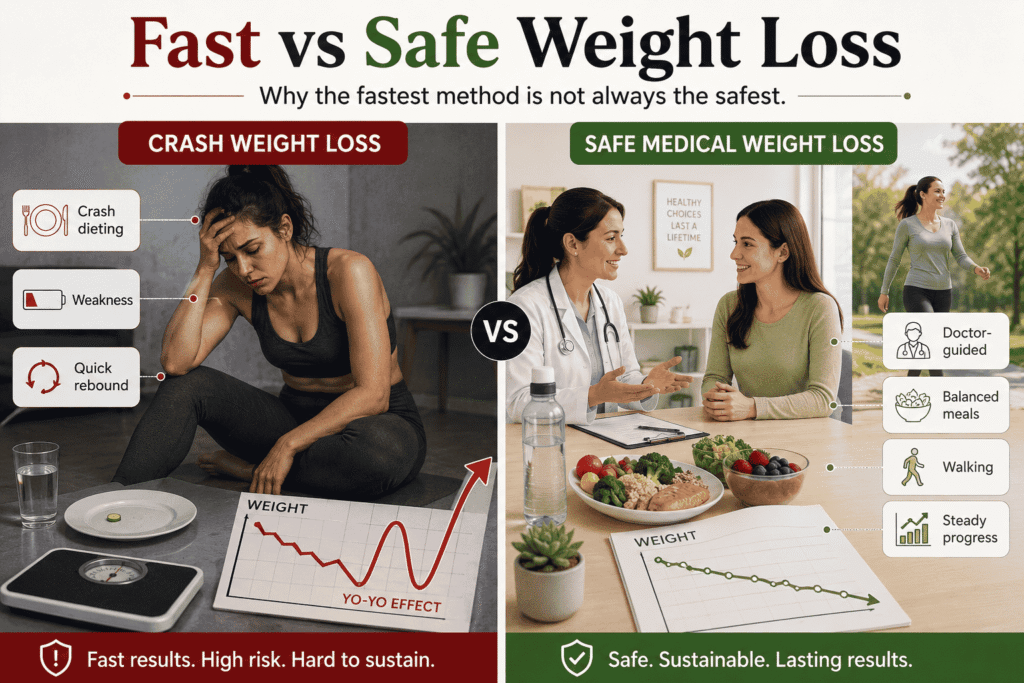
Most people searching for the fastest way to lose weight are not really asking for danger. They are asking for relief.
They want to feel lighter in their body. They want clothes to fit better. They want a sharper jawline, less belly heaviness, more confidence in photos, more energy, better movement, and sometimes better blood sugar, blood pressure, or cholesterol.
But the internet often gives them the wrong promise: “Lose 10 kg in 10 days.” “Melt belly fat overnight.” “No diet, no exercise, instant transformation.”
That is not medicine. That is marketing without responsibility.
Real medical weight loss is different. It asks three smarter questions:
- How much weight can you safely lose?
- How quickly can your body tolerate that loss?
- How do we make sure the weight does not come back?
A fast plan that damages metabolism, causes weakness, triggers hair fall, worsens mood, or leads to rebound weight gain is not truly fast. It is delayed failure. A slower plan that keeps working is often faster in the long run.
Weight-Loss Framework: Scale, Shape, and System
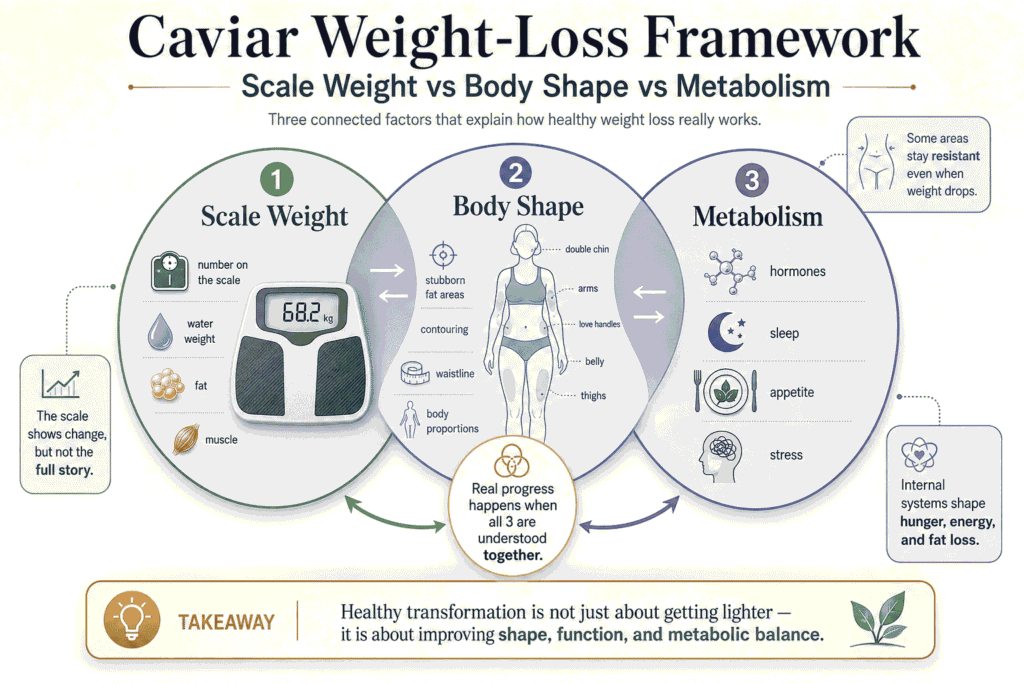
One of the biggest mistakes people make is treating all weight concerns as the same problem. They are not.
At Caviar, the smarter way to think about body transformation is through three layers:
Scale weight
This is the number you see when you stand on a weighing scale. It includes fat, muscle, water, food volume, hormones, inflammation, and even salt intake. Scale weight matters, but it does not tell the full story.
Body shape
This is how fat is distributed. Some people lose weight but still feel bothered by stubborn pockets under the chin, around the lower abdomen, arms, thighs, or waist. This is where contouring discussions may become relevant.
For localized fat concerns, Caviar’s guide on which areas can benefit from fat dissolving injections is useful because it separates spot-contouring from full-body weight loss.
Metabolic system
This is the deeper layer: appetite, insulin, sleep, stress, hormones, medications, gut rhythm, muscle mass, and daily movement. Most people fail because they only fight the scale and ignore the system.
True weight loss is not simply “eat less.” It is the art of creating a body environment where fat loss becomes possible without breaking the person.
The fastest safe path for most people: a medically supervised calorie deficit
The foundation of all fat loss is still energy balance. To lose fat, the body must use more energy than it receives from food and drink. This is called a calorie deficit.
But a calorie deficit should be designed carefully. Too small, and results may be frustrating. Too extreme, and the body may respond with fatigue, cravings, muscle loss, nutritional deficiencies, and rebound eating.
A practical starting point is to calculate your baseline needs. Caviar already has a complete guide here: 7 Step Guide to Calculating Calories for Healthy Weight Loss.
A smart calorie deficit looks like this:
- Enough protein to protect muscle
- Enough fiber to control hunger
- Enough water to support digestion and energy
- Enough sleep to regulate appetite hormones
- Enough movement to preserve metabolism
- Enough flexibility to make the plan sustainable
A bad calorie deficit feels like punishment. A good calorie deficit feels structured.
How much weight can you lose safely in a week?
A commonly recommended safe target is around 0.5 to 1 kg per week, though some people with a higher starting weight may lose more in the first few weeks because of water-weight changes.
The first week of weight loss can be misleading. When you reduce refined carbohydrates, salty foods, late-night meals, and sugary drinks, the scale may drop quickly. That does not always mean pure fat loss. Often, it is a combination of water, glycogen, reduced bloating, and some fat.
This is why you should not judge progress from one number. Better markers include:
- Waist measurement
- Energy level
- Hunger control
- Sleep quality
- Strength during workouts
- Face and body puffiness
- Clothes fitting
- Blood sugar, blood pressure, or cholesterol if medically relevant
The goal is not to chase the scale every morning. The goal is to build a body that becomes easier to live in.
The medically proven options: from lifestyle to medication to surgery
Different people need different levels of intervention. Below is a practical comparison.
| Method | Speed | Best For | Medical Supervision Needed? | Important Note |
| Calorie deficit + exercise | Moderate | Most people | Recommended | Safest foundation for long-term fat loss |
| High-protein structured diet | Moderate to fast | Appetite control, muscle preservation | Recommended | Helps reduce cravings and maintain lean mass |
| Very low-calorie diet | Fast short-term | Selected medical cases | Yes, strongly | Not safe for everyone |
| GLP-1 / GIP-GLP-1 medications | Fast to significant | Eligible patients with obesity or weight-related conditions | Yes | Works best with lifestyle changes |
| Bariatric surgery | Largest medical weight loss | Severe obesity or metabolic disease | Yes | Requires lifelong medical follow-up |
| Fat dissolving injections | Local contouring, not total weight loss | Stubborn fat pockets | Yes | Helps shape selected areas, not whole-body obesity |
Are weight-loss injections the fastest medically proven option?
For eligible patients, prescription weight-loss injections can be among the most effective non-surgical tools. These medicines may reduce appetite, increase fullness, and help people eat less with better control.
However, they are not beauty shortcuts. They are medical treatments. They should not be used just because someone wants to look slimmer for an event or because they saw a transformation video online.
A safe medical approach should include:
- BMI and waist assessment
- Blood pressure check
- Blood sugar or HbA1c if needed
- Thyroid and hormonal history when relevant
- Medication review
- Pregnancy and breastfeeding considerations
- Eating disorder screening
- Discussion of side effects, cost, availability, and long-term plan
The medicine may help reduce appetite, but the lifestyle plan teaches the body what to do with that reduced appetite.
Without the lifestyle plan, many people regain weight after stopping medication.
Is bariatric surgery the fastest proven weight-loss method?
For severe obesity, bariatric or metabolic surgery can produce the largest and most durable medical weight loss. But it is not a cosmetic shortcut. It is a serious medical procedure for selected patients, especially those with high BMI or obesity-related health conditions such as type 2 diabetes, high blood pressure, sleep apnea, or fatty liver disease.
Surgery changes the body’s digestive and hormonal environment. It can be life-changing, but it requires preparation, follow-up, nutrition monitoring, and long-term discipline.
So, the most accurate answer is:
Bariatric surgery may be the most powerful medical weight-loss intervention for severe obesity, while doctor-supervised medication plus lifestyle may be the strongest non-surgical route for many eligible patients. For everyone else, a structured calorie deficit remains the safest foundation.
What about fat dissolving injections?
Fat dissolving injections are often confused with weight-loss injections, but they are not the same.
Weight-loss injections work systemically by affecting appetite, fullness, and metabolic pathways. Fat dissolving injections are designed for localized fat pockets. They are more about shaping than total weight loss.
Caviar’s Lemon Bottle Fat Dissolving Injections page explains this body-contouring approach for selected areas. This may be useful for people who are already near their target weight but still struggle with stubborn areas such as:
- Double chin
- Lower abdomen
- Love handles
- Arms
- Thighs
- Small localized pockets that resist diet and exercise
But if someone needs to lose 15, 20, or 30 kg, fat dissolving injections are not the first answer. The first answer is medical weight management.
Aesthetic contouring works best when the body is already moving in the right direction.
For more clarity, Caviar’s blog on fat dissolving treatment myths and misconceptions is helpful because it explains what these treatments can and cannot do.
The safest “fast” formula: The 5-Part Medical Weight-Loss Stack
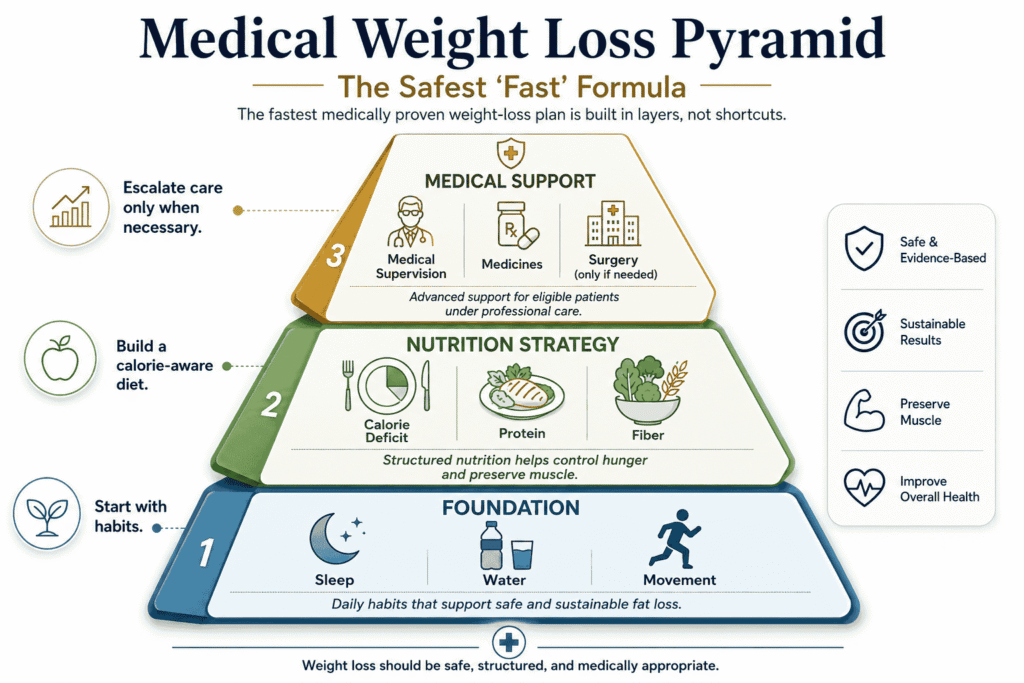
A smart weight-loss plan should feel like a system, not a panic reaction. Here is a practical framework.
The Calorie Compass
Start by knowing your maintenance calories. Without this, most people guess. And guessing is where frustration begins.
Use your basal metabolic rate, activity level, and daily food intake to estimate a safe deficit. Caviar’s calorie guide is a good internal starting point: 7 Step Guide to Calculating Calories for Healthy Weight Loss.
A strong plan usually includes:
- Lean protein in each meal
- Vegetables or fiber-rich foods daily
- Controlled portions of rice, roti, bread, pasta, or potatoes
- Reduced liquid calories
- Fewer fried foods
- Less late-night snacking
- Planned treats instead of emotional binges
The goal is not to remove food joy. The goal is to remove food chaos.
The Protein Anchor
Protein is not only for gym people. It is one of the most important tools in safe fat loss because it supports fullness and helps preserve muscle.
Good protein options may include:
- Eggs
- Chicken
- Fish
- Lean meat
- Lentils
- Beans
- Greek yogurt
- Paneer in controlled portions
- Protein-rich smoothies when appropriate
In Pakistani eating patterns, weight gain often happens not because meals are “bad,” but because the plate is unbalanced: too much starch, too much oil, too little protein, too little fiber.
A better plate might look like:
- Half plate vegetables or salad
- One quarter protein
- One quarter controlled carbohydrate
- Small amount of healthy fat
This is not a punishment plate. It is an intelligent plate.
The Movement Multiplier
Exercise alone rarely fixes weight if food intake is uncontrolled, but it improves almost everything that makes weight loss sustainable.
Aim for:
- Walking most days
- Strength training 2–3 times per week
- More daily steps
- Less sitting
- Simple mobility work
- Cardio that matches your fitness level
Strength training is especially important because muscle is metabolically active. Losing weight without protecting muscle can make the body smaller but weaker. Safe weight loss should reduce fat while protecting function.
The body is not a statue to carve. It is a living system to strengthen.
The Sleep and Stress Switch
Many people eat with discipline during the day and lose control at night. Often, the issue is not lack of willpower. It is stress, poor sleep, and hormonal hunger.
Poor sleep can increase cravings. Stress can increase emotional eating. Late nights can create a second dinner. Screens can delay sleep. Skipping breakfast or lunch can cause overeating later.
A safe plan should include:
- 7–9 hours of sleep when possible
- Fixed sleep and wake timings
- Reduced late caffeine
- Evening routine without heavy snacking
- Stress outlets such as walking, journaling, prayer, breathing, or therapy
- A realistic meal schedule
The body listens to rhythm. Weight loss becomes easier when life becomes less chaotic.
The Medical Gatekeeper
This is the most important step for anyone seeking fast weight loss.
Before aggressive dieting, medication, injections, or surgery, consult a qualified healthcare professional if you have:
- Diabetes
- High blood pressure
- Thyroid disease
- PCOS
- Kidney disease
- Liver disease
- Heart disease
- Pregnancy or breastfeeding
- History of eating disorder
- Rapid unexplained weight gain
- Use of steroids, antidepressants, or hormonal medicines
- Severe fatigue, hair fall, dizziness, or missed periods
Fast weight loss without screening can hide serious risks.
A wise plan does not begin with “How little can I eat?” It begins with “What does my body need to be safe?”
Why crash diets fail even when they “work”
Crash diets work on the scale because they create a large deficit. But they often fail the person.
Common crash-diet problems include:
- Intense cravings
- Muscle loss
- Fatigue
- Constipation
- Headaches
- Poor mood
- Hair fall
- Nutritional deficiencies
- Menstrual irregularities
- Binge-restrict cycle
- Rapid regain
The deeper issue is philosophical: crash diets turn the body into an enemy. They teach people to conquer hunger instead of understand it.
But the body is not lazy. It is protective. When food becomes too low for too long, the body adapts. It may reduce energy expenditure, increase hunger signals, and make movement feel harder.
The fastest safe plan respects biology. It creates enough pressure for fat loss, but not so much pressure that the body fights back.
What is the fastest way to lose belly fat safely?
There is no medically proven way to choose exactly where your body loses fat first. Belly fat usually reduces through overall fat loss, not sit-ups alone.
To reduce belly fat safely, focus on:
- Calorie deficit
- Protein-rich meals
- Reduced sugar and refined carbs
- Walking and strength training
- Sleep correction
- Stress management
- Reduced alcohol if applicable
- Medical screening for insulin resistance or hormonal concerns if needed
If someone is near their target weight but has a stubborn local pocket, aesthetic contouring may be discussed. Caviar’s fat dissolving injection treatment may be relevant for selected localized areas, but it should not be marketed as a replacement for weight loss.
The honest distinction is simple:
Weight loss changes the whole body. Contouring refines selected areas.
What is the fastest way to lose face fat or double chin?
Face fullness can come from fat, water retention, genetics, posture, aging, or skin laxity. That is why two people with the same weight may have very different jawlines.
For general facial fat, full-body fat loss helps. For a double chin caused by localized submental fat, fat dissolving injections may be a possible contouring option after assessment.
A good consultation should examine:
- Is it fat or loose skin?
- Is the chin weak or recessed?
- Is there water retention?
- Is weight loss still ongoing?
- Is the person a suitable candidate for injections?
- Would another treatment be more appropriate?
This is where aesthetic medicine becomes less about “removing fat” and more about facial balance.
The safest timeline: what results can people expect?
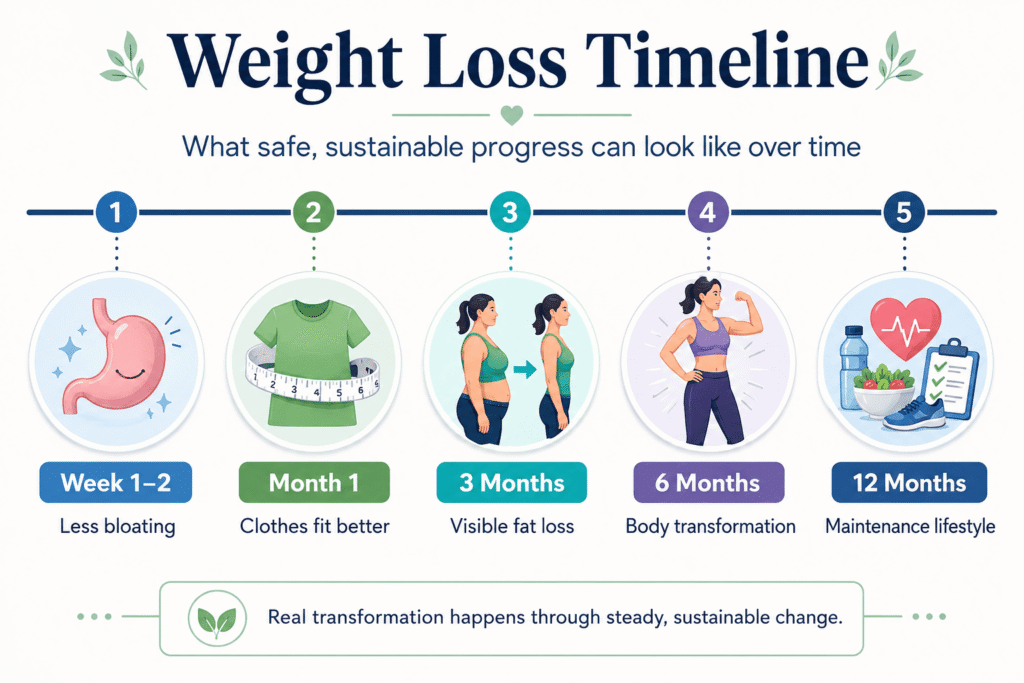
First 1–2 weeks
You may notice less bloating, better digestion, and a small scale drop. Some of this may be water weight.
First month
A realistic target may be 2–4 kg for many people, depending on starting weight, adherence, and medical factors. Clothes may start fitting better.
3 months
This is where visible fat loss often becomes more noticeable. Waist, face, and posture may improve. Fitness may increase.
6 months
This is where a properly followed plan can become transformational. Blood markers may improve, habits may feel easier, and body composition may change significantly.
12 months
This is the difference between a diet and a new identity. The goal is no longer just to lose weight; it is to become the kind of person who can maintain the result.
Who should avoid fast weight loss without medical supervision?
Do not attempt aggressive weight loss without professional help if you are:
- Pregnant or breastfeeding
- Under 18
- Elderly or frail
- Diabetic or using insulin
- Taking blood pressure medication
- Recovering from surgery
- Diagnosed with kidney, liver, heart, or gallbladder disease
- Experiencing eating disorder symptoms
- Losing weight unintentionally
- Having dizziness, fainting, chest pain, or severe weakness
In these cases, “fast” should not be the priority. Safety should.
A philosophical truth about weight loss
Weight loss is often spoken about as discipline, but it is also design.
People do not only need motivation. They need an environment that makes the better choice easier. They need meals that satisfy. Movement that fits their life. Medical support when biology is louder than willpower. A plan that respects culture, family meals, hormones, emotions, and time.
The body is not a machine that simply obeys instructions. It is a biography. It carries years of sleep, stress, pregnancies, work pressure, celebrations, grief, habits, hormones, and survival patterns.
So the fastest safe weight loss is not the harshest method. It is the most intelligent method your body can sustain.
Final answer: so, what is the fastest medically proven way?
The fastest medically proven way to lose weight safely is a doctor-guided plan matched to your medical category.
For most people, that means:
- Calculate your calorie needs
- Create a safe calorie deficit
- Eat enough protein and fiber
- Walk and strength train consistently
- Sleep properly
- Manage stress
- Consider prescription medication only if medically eligible
- Consider bariatric surgery only for severe obesity or metabolic disease under specialist care
- Use fat dissolving or body contouring only for stubborn localized areas, not as a substitute for weight loss
The best weight-loss plan is not the one that makes you suffer the most. It is the one your body can survive, accept, and maintain.
Because the real goal is not just to become lighter.
The real goal is to become well.
CDC guide to safe and healthy weight loss
FAQs
What is the safest fast weight-loss method?
The safest fast weight-loss method is a medically supervised calorie deficit combined with high-protein nutrition, regular physical activity, sleep improvement, and habit tracking. Eligible patients may benefit from prescription weight-loss medication under medical supervision.
Can I lose 10 kg in one month safely?
Some people with a very high starting weight may lose weight quickly at first, but losing 10 kg in one month is not suitable or safe for everyone. It should only be attempted under medical supervision, especially if you have diabetes, blood pressure issues, thyroid problems, PCOS, or other health concerns.
Are weight-loss injections safe?
Prescription weight-loss injections can be safe and effective for eligible patients when prescribed and monitored by a qualified healthcare professional. They are not suitable for everyone and should not be used only for cosmetic reasons.
Are fat dissolving injections the same as weight-loss injections?
No. Fat dissolving injections target localized fat pockets for contouring. Weight-loss injections work systemically by affecting appetite and fullness. Fat dissolving treatments are not a replacement for full-body weight loss.
What is the fastest way to lose belly fat?
The fastest safe way to reduce belly fat is overall fat loss through a calorie deficit, protein-rich nutrition, regular activity, strength training, sleep correction, and stress control. Spot reduction through exercise alone is not medically reliable.
How do I know if I need medication for weight loss?
A healthcare professional may consider medication if your BMI and health conditions meet medical criteria. This decision should include medical history, blood tests if needed, current medications, goals, possible side effects, and long-term maintenance planning.
Can body contouring help after weight loss?
Yes, body contouring treatments may help refine stubborn areas after weight loss or when localized fat does not respond well to diet and exercise. A consultation is needed to decide whether fat dissolving injections or another treatment is suitable.